
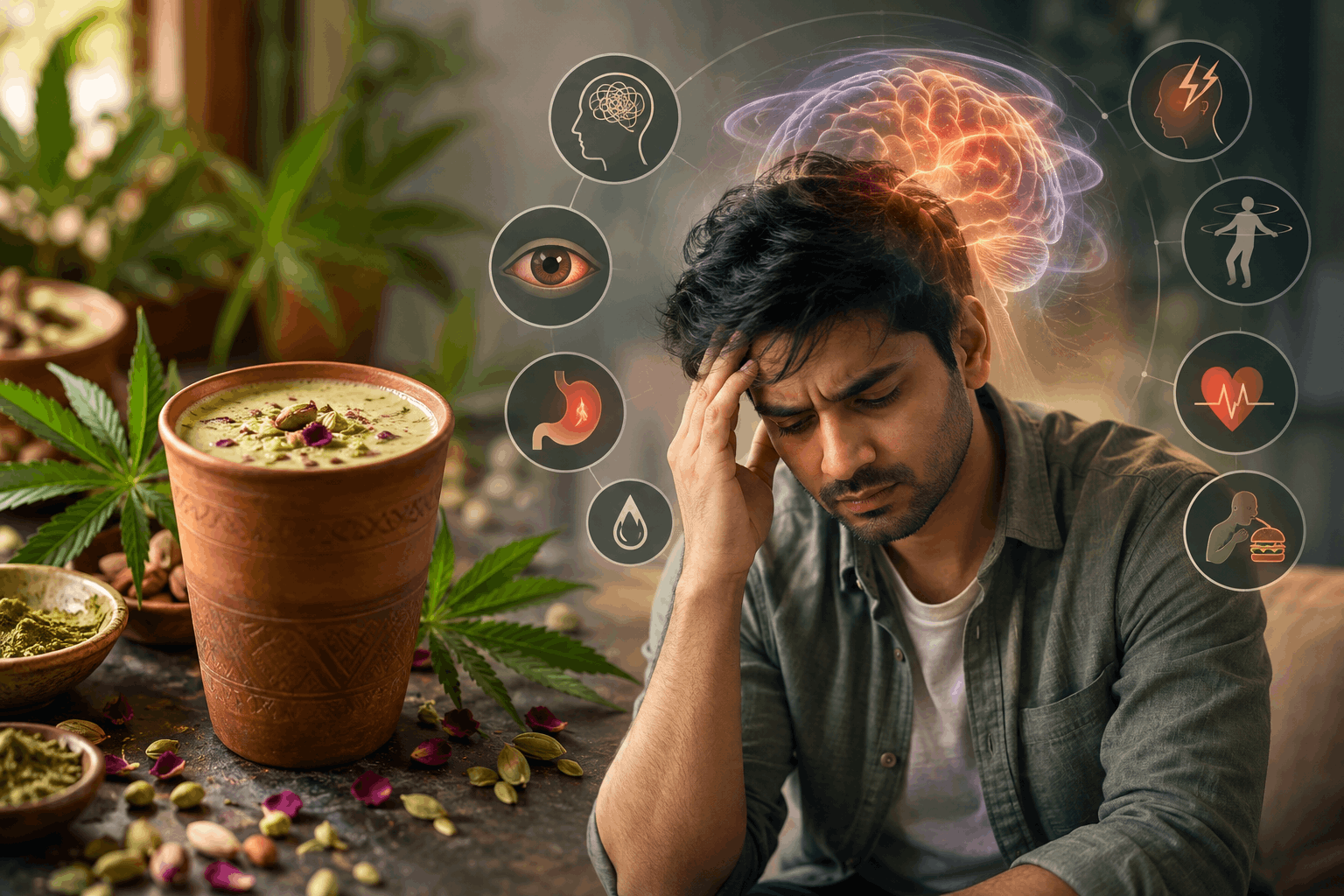
Most people meet bhang at Holi or Shivratri, in a glass of thandai that tastes like a festival treat. That is exactly why it catches so many people off guard. The side effects of bhang can feel mild for the first hour and then hit hard, long after a second glass has gone down. This blog breaks down what bhang does to the brain and the body, how the risks shift with the form you take, how long the effects last, and the point at which festival use quietly turns into something that needs help.
How Bhang Works, and Why the Timing Trips People Up
Bhang is made from the leaves of the cannabis plant, ground into a paste and mixed into drinks, sweets, or small balls. Its active ingredient is THC, the same compound found in ganja and charas. The difference is how it enters the body. Bhang is swallowed, not smoked, so the THC passes through the stomach and liver first. The liver turns it into a stronger, longer-lasting form before it reaches the brain.
That one fact explains most bhang mishaps. Eaten or drunk, bhang is slow to start and slow to leave:
- Effects usually begin 30 to 90 minutes after you take it.
- They peak at around 2 to 3 hours in.
- The full experience can last 6 to 12 hours.
A first-timer who feels nothing after half an hour often assumes it is weak and takes more. By the time the first dose lands, the second is already on its way. Smoked cannabis works the opposite way, within minutes, which makes it easier to feel and stop. With bhang, there is no such warning.
Side Effects of Bhang on Brain
Because THC acts on the parts of the brain that handle memory, emotion, judgment, and coordination, the first side effects of bhang on the brain show up there. After a normal dose, most people notice slowed thinking, patchy short-term memory, a stretched sense of time, and clumsy coordination. Reaction time drops, which is why driving or riding after bhang is as risky as doing it drunk. Mood can swing from giggly to anxious within the same hour.
After a large dose, these effects turn sharper: intense anxiety, paranoia, confusion, and in some people, a frightening break from reality with hallucinations. People with a personal or family history of psychosis, bipolar disorder, or severe anxiety carry a higher risk here, and bhang can trigger or worsen those conditions.
The teenage and young-adult brain keeps developing until about the age of 25, so regular THC exposure in those years is linked to lasting problems with memory, attention, and motivation, and a higher risk of psychosis. When low mood or anxiety is already in the picture, structured mental health support alongside addiction care matters.
Side Effects of Bhang on the Body
The side effects of bhang on the body are easy to miss until a dose is too big. The common ones are a racing or pounding heartbeat, a drop in blood pressure that causes dizziness when you stand, dry mouth, red eyes, and a strong rise in appetite. Many people also feel nausea, and a heavy dose can bring repeated vomiting, cold sweats, and a pale, faint feeling that is often called greening out.
For a healthy adult, these effects are unpleasant but usually pass. The real danger lies with the heart. A sudden jump in heart rate can be serious for anyone with a heart condition, high blood pressure, or a past heart attack. Falls and accidents during the dizzy, uncoordinated phase are common and far more likely for older people. None of this is helped by the fact that bhang is taken in a festive mood, often on an empty or alcohol-filled stomach.
How the Side Effects Change With the Form You Take
Bhang comes in several forms, and each one changes how fast the dose hits and how easy it is to take too much.
The Bhang Drink: Thandai and Lassi
This is the classic festival form. Bhang paste is whipped into milk, nuts, and spices, so the bitter taste disappears and the drink goes down fast. The sweet, familiar flavor is the trap. Bhang drink side effects are the slow-onset pattern at its strongest, because it is easy to finish a large glass and easy to pour a second before the first one works.
Bhang Goli and Bhang Ka Gola
Goli are small balls of ground bhang, and bhang ka gola is the same idea in a bigger lump. They look harmless and are swallowed in seconds. The problem is strength. A goli has no label, so two people can take the same number and feel very different things. Bhang goli side effects and bhang ka gola side effects are harder to predict than the drink, and people often swallow several before anything happens, then get hit by all of them at once.
Bhang Chocolate and Other Edibles
Bhang is now sold baked into chocolates, cookies, and gummies, and these are the riskiest form for two reasons. A tasty edible is easy to overeat without thinking, and the THC packed into a single piece can be high. Bhang chocolate side effects also show up late, often two hours after the last bite, which is long enough to eat three more. Edibles that look like ordinary sweets are a serious danger to children in the house, who can find them and swallow a large dose by mistake.
Bhang Seeds
This one needs a clear answer. Cannabis seeds themselves carry almost no THC, so plain bhang seeds do not produce a high and have few direct effects beyond mild stomach upset if eaten in large amounts. The catch is what gets sold as seeds. If the seeds are mixed with leaf or resin, or confused with ground bhang, the usual THC effects follow. Treat any seed product you cannot verify as if it could be active, and keep it away from children.
Eating Bhang Versus Smoking Bhang
Some people smoke the plant instead of eating the paste, and the two routes behave very differently. The side effects of eating bhang come on slowly and last far longer, which makes overdose easier. The side effects of smoking bhang start within minutes and fade sooner, so dosing is easier to control, but smoking adds its own problem: hot smoke irritates the throat and lungs and, over time, brings coughing and breathing trouble.
| How it compares | Eating or drinking bhang | Smoking bhang |
| Onset | 30 to 90 minutes | Within minutes |
| Peak | 2 to 3 hours | 15 to 30 minutes |
| How long it lasts | 6 to 12 hours | 2 to 4 hours |
| Judging the dose | Hard, easy to overdo | Easier to feel and stop |
| Main added risk | Delayed overdose, greening out | Throat and lung irritation |
Long-Term Side Effects of Bhang
Occasional festival use is one thing. Regular use is where the long-term side effects of bhang build up. The body adapts, so the same amount does less, and people take more to get the old effect. That tolerance is the first step toward dependence.
Over months and years, heavy users often report ongoing memory and attention problems, low motivation that families mistake for laziness, broken sleep, and higher rates of anxiety and low mood. A smaller group develops cannabis hyperemesis, a cycle of severe vomiting that eases only when they stop. People who smoke their bhang add long-term airway damage on top. And when a regular user stops, withdrawal is real: irritability, anxiety, poor sleep, low appetite, sweating, and strong cravings.
These symptoms usually begin within one to three days, peak around days two to six, and settle over two to three weeks, though sleep can take longer to recover. Knowing this helps, because many people relapse simply because they did not expect the first week to feel so rough. A planned cannabis de-addiction program is built around exactly this window.
When Too Much Bhang Becomes an Emergency
Picture a first-timer at a Holi party. At noon, she drinks one glass of thandai, feels nothing by half past twelve, and has a second because everyone swears it is harmless. Around half past two, both doses land at once. Her heart is pounding, the room tilts, and she is sure she needs a hospital. Nothing is permanently wrong, and the bhang will fade by night, but the next several hours are frightening and were avoidable.
If this happens to someone near you, the aim is to keep them calm and safe while it wears off. Move them to a quiet, dimly lit place, stay with them, and remind them that this is the bhang and it will pass. Reassurance works well for bhang panic. Offer small sips of water or glucose water, and a little food if they can manage it. Let them rest where someone can keep an eye on them.
A few things do not help, despite what people say. There is no instant cure for a bhang high. Lemon water, curd, a cold bath, or strong coffee will not clear the THC, and only time does that. Do not give alcohol, more bhang or unprescribed sleeping pills, and do not let the person drive or ride.
Call for emergency help if the person cannot be woken, vomits again and again, has chest pain or trouble breathing, becomes aggressive or deeply paranoid, sees or hears things that are not there, or talks about harming themselves. Get help quickly too if the person is a child, is elderly or pregnant, or has a heart or mental health condition.
Bhang Side Effects Treatment and Support
Needing to manage a bhang high once after a festival is first aid. Needing to do it again and again, to get through work or to sleep, is a warning sign. Bhang use has crossed into dependence when several of these appear together over months: using far more than planned, failing to cut down, needing more for the same effect, and carrying on despite memory problems, money trouble, low mood, or conflict at home.
Bhang side effects treatment follows the same path as other cannabis dependence care, and it works. It usually starts with an honest assessment of how heavy the use is and whether anxiety, depression, or psychosis is also present. Where withdrawal is likely to be difficult, a short medically supervised detox steadies the first days. The core of recovery is talking therapy, mainly counseling and therapy that targets cravings, triggers, and the festival and evening routines that drive use, together with family sessions and a clear relapse-prevention plan. This is general information and not a diagnosis, so a proper assessment with a professional is the right next step for any real concern.
Worried about bhang use at home?
As a women-only rehabilitation center in Himachal Pradesh, Vaishalya runs structured de-addiction and counseling programs tailored to each person. Learn more about our Nasha Mukti Kendra in Himachal, or message us for a confidential conversation.
Bhang wears a festive, harmless image, but the side effects of bhang are real, and asking for help early is far easier than waiting for a crisis.
Frequently Asked Questions
How long do the side effects of bhang last?
Most effects last 6 to 12 hours, far longer than smoked cannabis. They begin 30 to 90 minutes after you take it and peak at around 2 to 3 hours. Tiredness and a foggy head can linger into the next day.
Can you die from too much bhang?
Death from bhang alone is very rare because THC does not shut down breathing the way some drugs do. The real risks are accidents during the high, severe panic, and heart strain in people with a heart condition. A very large dose, especially in a child, still needs urgent medical help.
Are bhang seeds safe to eat?
Pure cannabis seeds contain almost no THC and do not cause a high, so on their own they carry little risk beyond mild stomach upset in large amounts. The danger is seed products mixed with leaf or resin, or mistaken for ground bhang. Keep any unverified seed product away from children.
What is the difference between eating and smoking bhang?
Eaten bhang starts slowly and lasts 6 to 12 hours, which makes it easy to take too much. Smoked bhang starts within minutes and fades in a few hours, so it is easier to judge, but smoking irritates the throat and lungs and causes damage over time.
Is bhang addictive?
Yes. Bhang delivers the same THC as ganja, and regular use leads to tolerance, cravings, and withdrawal. A festive image makes dependence easy to miss, which is why it is often spotted late. Structured treatment helps people stop and stay stopped.
What should you do if someone takes too much bhang?
Keep them calm in a quiet, dim place, stay with them, and give small sips of water. Do not offer alcohol, more bhang or coffee, and do not let them drive. Get emergency help if they cannot be woken, have chest pain, vomit repeatedly, or become paranoid or aggressive.
