


- Resources
- Volunteer
- Internship
- Our approach
- FAQ
Vaishalya Wellness · Palampur, Himachal Pradesh
Every question families ask before choosing a women's rehabilitation centre.
Answered plainly, without sales language. Admission and consent, fees, safety, detox, visiting rules, and what recovery actually looks like at a women only rehab in the Kangra valley.

Answers to the questions families ask most
No answer matches that word. Try “fees”, “chitta”, “visit”, or call us on +91 82194 74936.
Admission and getting started
How a woman is admitted, who decides, what the law says about consent, and what happens on day one.
Call either of our numbers and speak to a counsellor first. We take a short history over the phone, no charge and no obligation, and tell you honestly whether residential treatment is the right step or whether outpatient counselling would serve her better. If residential care is indicated, we agree a date, explain what to bring, and arrange transport if you need it. Most families complete the whole process within 24 to 48 hours of the first call.
The Mental Healthcare Act 2017 is clear that adults have the right to consent to their own treatment, and we follow it. There is a narrow provision for supported admission where a person cannot make treatment decisions for herself and there is a serious risk to her life or to others, and that route requires medical assessment and documentation, not just a family's wish. In practice, the honest answer is that we work hard to get her to agree, because forced admissions rarely hold. Our team helps families run a structured intervention conversation, and that succeeds far more often than people expect.
Aadhaar or another photo ID for the patient, ID for the admitting family member, and any recent prescriptions, discharge summaries or lab reports if she has been treated before. If she has a chronic condition such as diabetes, thyroid disease or epilepsy, bring the current medication list. Nothing else is needed to start.
We admit adult women aged 18 and above. We do not run a facility for minors, and if you are calling about a girl under 18 we will refer you to an appropriate child and adolescent service rather than admit her here. There is no upper age limit, and we regularly treat women in their fifties and sixties.
On the day itself, roughly two to three hours. That covers a medical examination, a psychiatric assessment, a belongings check, paperwork, and time for the family to see the room and meet the staff who will be caring for her. We do not rush families out of the building.
Yes. We arrange pickup from Gaggal airport in Dharamshala, Pathankot and Chakki Bank railway stations, and door to door from most of Himachal, Punjab, Haryana, Chandigarh and Delhi NCR. A female attendant travels with the vehicle. There is a travel charge based on distance, quoted to you in advance.
Yes. Addiction does not follow office hours and neither do we. Our phones are answered at night and on holidays, and we have completed admissions at 2 am when a family reached breaking point. Call first so a bed and a duty doctor are ready when you arrive.
Pack for the programme you have chosen. Laundry is done at the centre, so she does not need a change of clothes for every day of her stay. For a detox only admission, about a week of clothing is enough. For a 60 or 90 day programme, pack around ten days worth. For a six month programme, pack for the season she arrives in and have the rest sent later rather than carrying everything on day one. In every case bring warm layers, because Palampur is cold from November to March. Also bring toiletries without alcohol content, prescription medicines in their original packaging, and photo ID. Not allowed: alcohol, any non prescribed substance, mouthwash and sanitiser containing alcohol, sharp objects, large amounts of cash, and jewellery. We send you a printed list before the admission date.
Phones are kept in secure storage during the first phase of treatment. This is not a punishment, it is the single most effective way to break contact with suppliers and with the people and patterns that maintained the addiction. Supervised calls to family begin within the first week, and phone access is gradually restored as she progresses. Women who need to stay in touch with dependent children get more contact, not less.
Yes, on the day of admission. A doctor examines her, records vital signs, and orders baseline blood work including liver function, because long term alcohol use in women damages the liver faster than in men. If the assessment shows she needs hospital level care first, we tell you straight away and help you arrange it.
Yes, and we would rather know about them before she arrives. Existing conditions are managed alongside the addiction treatment, with her regular medicines continued under supervision. Conditions that need intensive medical monitoring, such as advanced liver failure or unstable cardiac disease, may need hospital stabilisation first, and we will tell you honestly if that applies.
Case by case, and only after obstetric assessment. Withdrawal during pregnancy can be dangerous for both mother and baby and must never be attempted without medical supervision, so pregnancy is a reason to get help faster rather than to wait. Call us and we will tell you honestly whether we can safely take her or whether she needs a hospital based setting first.
Yes, and this is one of the most common calls we take. Our counsellors coach the family on what to say, who should say it, what not to say, and how to respond to the arguments she is likely to make. A planned intervention with two or three calm family members works far better than an emotional confrontation. We can join the conversation by phone or video if that helps.
Almost never for a voluntary admission. Court directed treatment exists in India in specific legal situations, and if a court has passed such an order we can accept the patient with the documentation. For an ordinary family situation, no police involvement is required and we would discourage it, because it damages trust that treatment then has to rebuild.
We keep our resident numbers deliberately small so that each woman gets real clinical attention rather than a bed in a crowded hall. That means beds are sometimes limited. Call and ask about current availability, and if we are full we will tell you and suggest another safe option rather than keep you waiting.
Yes. We handle admissions for families in the Gulf, the UK, Canada, Australia and the US regularly, often where the patient is in India and the decision makers are not. We arrange airport pickup from Gaggal or Delhi, run video assessments before travel, and give the overseas family scheduled video updates from the clinical team.
Yes, and we encourage it. Any centre that will not let you walk through the residential area before admission is telling you something. Call ahead so a counsellor is free to take you around and answer questions properly.
Yes. Most of our residents come from outside Himachal Pradesh, largely from Punjab, Chandigarh, Haryana, Delhi NCR, Jammu and Uttarakhand. Families choose a rehab centre in Himachal precisely because the distance from home removes her from the environment, the suppliers and the social circle that kept the addiction going.
Fees, payment and insurance
What treatment costs, what is included, why the cheapest option is usually the most expensive one, and how insurance actually works in India.
Across India, private residential treatment ranges from a few thousand rupees a month at unregulated centres to well over two lakh a month at luxury facilities. Our fee is <strong>25,000 rupees per month</strong>, and it is negotiable. That covers accommodation, all meals, nursing care, doctor and psychiatrist reviews, therapy and routine medication, at a licensed, genuinely women only centre with female staff on every shift. We publish the number because families deserve to compare properly instead of ringing round for quotes.
The 25,000 rupee monthly fee covers accommodation, all meals, nursing care, doctor and psychiatrist reviews, individual and group therapy, yoga and recreational activities, and routine medication. Charges quoted separately are the one time admission and assessment fee, transport if we collect her, specialist investigations or scans, and any hospital referral. We give you the full breakdown in writing before admission so nothing appears later.
The 25,000 rupee monthly fee is for our standard shared accommodation, which for many women works better clinically, because isolation feeds the illness and peer contact supports recovery. A private room costs more and suits women who need quiet for medical reasons or whose privacy concerns are severe. We will give you an honest recommendation rather than upselling the expensive room.
Yes. We can split the 25,000 rupee monthly fee into instalments across a longer programme, and the fee itself is negotiable where a family is genuinely stretched. We discuss this openly rather than making you ask. Money is a real constraint for most families and we would rather find a workable plan than lose a woman to a centre that is cheap because it is unsafe.
Partly, and the honest answer is that it is inconsistent. Since the IRDAI directive requiring insurers to cover mental illness, many policies do cover psychiatric inpatient care, but substance use treatment is still excluded or sub limited in a large number of policies. Send us your policy document and we will read the exclusions with you before you commit.
Because they are not providing treatment. A centre charging a few thousand rupees a month cannot pay a psychiatrist, a doctor, nurses and trained therapists, so it usually pays a few untrained attendants to lock people in a room. Those are the centres that generate the abuse cases you read about. If a quote seems impossibly low, ask who the treating psychiatrist is, ask for the registration number, and ask to see the residential area.
Government de addiction centres and centres funded under the Ministry of Social Justice scheme are free or close to it, and for families with no means they are a legitimate option. The trade offs are usually waiting lists, very few women only beds, shorter stays focused on detox rather than rehabilitation, and limited aftercare. A private centre buys you time, clinical depth and continuity, not moral superiority.
Fees are charged monthly at 25,000 rupees. A detox only stay is billed pro rata, two months is 50,000, three months is 75,000 and six months is 1,50,000 before any adjustment, and we reduce the monthly rate for programmes booked beyond 90 days. It is worth knowing that outcome data consistently favours longer treatment. Detox alone handles the withdrawal, a 90 day stay begins to change behaviour, and six months is where relapse rates fall meaningfully.
Routine medication prescribed as part of the treatment programme is included. Medicines for unrelated chronic conditions, specialist drugs and any hospital treatment are billed separately at cost, with the pharmacy bill shown to you.
Unused days on a prepaid month are adjusted according to our written refund policy, which you receive at admission. The admission and assessment fee is not refundable because that work is already done.
No. Family sessions are part of the programme, not an add on. Addiction in a woman is almost never a problem she carries alone, and treating her without working with the household she returns to is half a treatment.
A women only facility usually costs somewhat more per month, because it needs female staff on every shift, separate infrastructure, and smaller resident numbers. At 25,000 rupees a month we sit close to what mixed centres of comparable clinical quality charge. What you are paying for is the thing that makes women stay in treatment instead of leaving in the first fortnight.
Yes, by international transfer or through a family member in India. Send us a message on WhatsApp and we will share the correct account details directly rather than posting them on a public page.
Safety, privacy and why women only
The questions families are most afraid to ask out loud. Staff, supervision, confidentiality, and how we prevent the things you have read about in the news.
Yes. Vaishalya Wellness is a residential facility for women, not a women's wing inside a men's centre, and that distinction matters more than any brochure line. Nursing, attendant and housekeeping staff in the residential area are female and present on every shift. Male clinical staff such as a visiting psychiatrist see patients only in clinical areas during scheduled hours and never enter the residential block unaccompanied.
Because women drop out of mixed centres at much higher rates, and the reasons are consistent across the research and across our own experience. A large proportion of women in addiction treatment have a history of physical or sexual abuse, often by men, and being asked to do trauma work in a room full of male strangers stops that work before it starts. Add the stigma an Indian woman carries for drinking or using at all, and a mixed setting silences exactly the conversations that need to happen.
Female staff on duty, and the clinical team during rounds. Visitors are received in a separate visiting area, not in the residential block. Contractors and maintenance staff enter only at scheduled times with a staff escort and never when residents are unsupervised.
Cameras cover common areas, corridors and entry points. There are no cameras in bedrooms, bathrooms or therapy rooms, and any centre that tells you otherwise has confused surveillance with safety. Footage is accessible only to the administrator and the clinical head.
Those cases share a pattern: no qualified clinical staff, no external oversight, locked wards, no family contact, and no complaints route. We work against each one. There is a named psychiatrist and doctor responsible for care, staff are trained and background checked, family contact is scheduled rather than blocked, residents have a written complaints procedure and can raise concerns with the clinical head directly, and we do not use physical restraint as a routine tool.
Yes. Her name, diagnosis and admission are not shared with anyone outside her treating team and the family member she nominates. We do not use patient photographs, names or stories in our marketing, and we do not publish testimonials that could identify a resident. If someone calls asking whether she is here, we do not confirm it.
Not from us. This is one of the reasons families choose a rehab centre in Himachal rather than one in their own city, particularly families from Punjab, Chandigarh and Delhi. Distance is a privacy tool. Nobody from your circle drives past our gate.
Yes, on scheduled visiting days after the initial settling in period, which is usually the first two weeks. Immediate family are welcome. We limit visits in the first fortnight because that is when a distressed resident is most likely to persuade a distressed family to take her home, and taking her home in week two is how relapse happens.
Supervised calls begin in the first week and become more frequent as treatment progresses. If she has young children, we prioritise that contact. We will always tell you if she is refusing to speak to you, and why, rather than letting you assume the worst.
Yes. You get a structured update from the clinical team at agreed intervals, covering physical health, participation in therapy, mood, and what we are working on next. You are not left to guess for three months.
We are registered under the applicable Himachal Pradesh state authority and the Mental Healthcare Act framework. Ask us on the phone or during your visit and we will show you the certificate rather than a claim on a website. We would also encourage you to ask this of every centre you shortlist, and to walk away from any that avoids the question.
Yes, and residents may request to be seen by a female clinician. Many women will not describe a symptom honestly to a male doctor, particularly around gynaecological health, sexual health or abuse history, and pretending otherwise costs us diagnoses.
A duty nurse is present around the clock and a doctor is on call. For anything beyond our scope we transfer to a hospital in Palampur or Dharamshala, with staff accompanying her, and the family is called immediately, not afterwards.
For a voluntary admission, yes, and the law is clear on that. What we do is talk to her, involve the family, and try to hold her through the days when the urge to leave peaks, which is usually days three to ten. We do not physically prevent an adult from leaving, and we tell families this before admission so nobody is misled.
Carefully, and not all at once. Trauma work is paced, done individually with a trained psychologist before it ever goes near a group, and never forced. Stabilising sleep, withdrawal and safety comes first. Pushing a woman to relive an assault in week one is retraumatisation, not therapy.
Rooms are allocated with age, temperament and clinical need in mind, so a 22 year old is not usually roomed with a 60 year old. Therapy groups are mixed by design, because older women in recovery are often the most powerful influence on younger ones.
No. Beating, tying, cold water and starvation are not treatment, they are abuse, and centres that use them are why so many families are frightened of the word rehab. Our clinical model is medical and psychological. If a resident is agitated or at risk, the response is medical review and de escalation by trained staff.
Ask five questions. Who is the treating psychiatrist and what is their registration number. Can I see the residential area today. What is your licence number. What is your written policy on family contact. What exactly does the fee include. Vagueness on any of these, refusal to let you inside, or a price that is far below everyone else, means keep looking.
Detox, treatment and therapy
What actually happens clinically: withdrawal management, the therapies we use, how long treatment takes, and what success honestly means.
It depends on the substance, how long she has used, and whether there is a mental health condition underneath. As a rough guide: 30 days covers detox and early stabilisation, 90 days is the point at which new behaviour starts to hold, and six months gives the best relapse figures. Anyone promising a permanent fix in 15 days is selling something.
Four. A <strong>detox only</strong> admission, which manages withdrawal safely and usually runs two to four weeks. A <strong>60 day programme</strong>, which adds the first proper block of therapy. A <strong>90 day programme</strong>, which is what we recommend for most women, because that is the point at which new behaviour starts to hold. And a <strong>six month programme</strong> for long standing dependence, opioid use such as chitta, or where there is a mental health condition underneath the addiction. The psychiatrist recommends one after the assessment and the family decides. A shorter programme can be extended if she is doing well and wants to stay, and many women do exactly that.
Detox is the medically supervised process of clearing the substance from the body while managing withdrawal safely. It is uncomfortable, and we do not pretend otherwise, but it is not the agony people imagine, because withdrawal symptoms are actively treated with medication under a doctor's supervision. Most women describe the first three to five days as the hard part.
Tremor, sweating, nausea, racing heart, anxiety and insomnia are common. In heavier dependence, withdrawal can progress to seizures or to delirium tremens, which is a medical emergency with a real mortality rate. This is exactly why alcohol withdrawal should never be attempted at home without medical supervision. If you are reading this because someone is shaking and confused after stopping drinking, take her to a hospital now.
Cognitive behavioural therapy, motivational interviewing, individual psychotherapy, group therapy, family therapy, and the 12 step framework for those who find it useful. Alongside these we run yoga, meditation, expressive and art based sessions, and structured physical activity. The mix is set per resident, not applied uniformly.
Yes, where clinically indicated, prescribed and reviewed by a psychiatrist. Withdrawal is managed with medication, and there are approved medicines that reduce craving and support abstinence for alcohol and for opioids. We do not list drug names or doses on a public page, because self medicating from a website is dangerous. The psychiatrist will explain every prescription to you and to her.
Early rise, yoga and meditation, breakfast, a morning therapy block of group or individual sessions, lunch, rest, an afternoon of skills work, activity or physical exercise, evening reflection or a 12 step meeting, dinner, and lights out at a fixed time. Structure is not incidental to recovery, it is a large part of the treatment.
Yes, and treating them separately is one of the main reasons people relapse. A large share of the women we see are drinking or using on top of an untreated depression, anxiety disorder or trauma response. Both are treated together, by the same team.
It means a substance use disorder and a mental illness present at the same time, for example alcohol dependence with major depression, or benzodiazepine dependence with panic disorder. It is common in women, frequently missed, and requires an integrated treatment plan rather than sending her to one place for the drinking and another for the depression.
Yes. Dependence on sleeping tablets, benzodiazepines like alprazolam, and prescription painkillers is one of the most under recognised problems among Indian women, particularly homemakers and working professionals who were prescribed something legitimately and never came off it. Withdrawal from these medicines can be dangerous and needs a slow, medically supervised taper. Never stop them abruptly at home.
Yes. Nicotine dependence is addressed as part of the programme with counselling and, where appropriate, replacement therapy. We do not treat it as trivial simply because it is legal.
Yes, daily. In the Kangra valley that is not a marketing line, it is a practical use of the setting. Both have good evidence for reducing craving, improving sleep and lowering anxiety in early recovery, and they give a woman something she can keep doing at home.
Yes. Structured aftercare includes scheduled follow up calls, ongoing counselling in person or online, family review sessions, and support in finding a local group. Recovery is not something that ends at the gate.
Then she calls us, and we deal with it. Relapse is common in a chronic relapsing illness and it is not a moral failure or proof that treatment was wasted. What matters is how quickly she gets back into support. Many women who relapse once go on to sustained recovery. Families who treat a slip as a betrayal usually turn it into a full return to use.
Any centre quoting you a 90 percent success rate is either measuring something meaningless or lying. Nobody can honestly claim that, because outcomes depend on the substance, the duration of use, mental health, family support and length of stay. What we will tell you is that completion of a 90 day programme, family involvement, and engagement with aftercare are the three factors that reliably improve outcomes. Ask us about our own follow up data and we will discuss it plainly.
Detox is the medical process of getting the substance out of the body safely, and takes days to a couple of weeks. Rehabilitation is the psychological and behavioural work that follows, and takes months. De addiction is the common Indian umbrella term for both. Detox alone, with no rehabilitation, has a very high relapse rate, which is why a two week stay usually fails.
Sometimes, yes. Very few people arrive genuinely wanting to stop, most arrive because someone made them come. Motivational work in the first weeks is designed exactly for this, and a significant number of women who were furious on day one are engaged by week three. What does not work is a short stay with no therapy, where nothing has a chance to shift.
Women develop dependence faster on the same amount of alcohol, suffer liver and cardiac damage sooner, and are far more likely to have a co occurring depression, anxiety disorder or trauma history. They are also more likely to have started using in response to a relationship, a bereavement or a mental health problem rather than socially. Treatment has to address hormonal health, childcare and family guilt, and the specific shame Indian society attaches to a woman who drinks. A programme designed around men misses most of that.
Yes, where they occur together, which is often. These are treated by the clinical team as part of the same care plan, with the appropriate psychiatric input and supervision. If someone is currently at immediate risk, call us or take her to the nearest emergency department without waiting.
Yes, and it is not optional in spirit. The household a woman returns to either supports recovery or undoes it. Sessions cover what to say, what to stop saying, how to stop enabling without abandoning her, and how the family manages its own anger and exhaustion.
We use the 12 step framework as one component, not as the whole treatment. Some women find enormous value in it and go on to Alcoholics Anonymous or Narcotics Anonymous after discharge. Others do not, and are not forced into it. The clinical core of the programme is evidence based psychological therapy.
Alcohol, chitta and other substances
Substance by substance: what it does to a woman's body, what withdrawal looks like, and what treatment involves.
Women have less body water and lower levels of the enzyme that breaks down alcohol, so the same drink produces a higher blood alcohol level than it would in a man of the same weight. The consequences are not theoretical. Women develop alcoholic liver disease after fewer years and at lower intake, and face higher risks of cardiac damage, breast cancer and alcohol related brain injury. A woman drinking the same as her husband is doing more damage to herself than he is.
Not automatically, but it is the most common path into one for Indian women, because it does not look like drinking. The questions that matter are whether she can stop for a fortnight without difficulty, whether she needs more than she used to for the same effect, whether she drinks alone or hides it, and whether she drinks to manage anxiety or sleep. Two or more yes answers is worth a consultation.
Bottles in unusual places, mouthwash or perfume used constantly, unexplained spending, defensiveness about a topic nobody raised, sleeping late or being unreachable in the afternoon, tremor in the morning that settles after a drink, and a slow withdrawal from friends and family. Hidden drinking is more common in women than in men, largely because the social punishment is far heavier.
Chitta is the street name used across Punjab and neighbouring parts of Himachal for a white powder sold as heroin, usually heavily adulterated with unknown substances. It is dangerous for three reasons: dependence forms extremely fast, the actual content and strength varies from packet to packet so overdose is unpredictable, and injecting brings infection and blood borne disease risk. Chitta addiction in women is badly under reported because families hide it. We treat it, and treatment works.
It begins with medically supervised opioid withdrawal management, because unsupervised chitta withdrawal is brutal and is the single most common reason people go straight back to using. Once she is stable, treatment moves to craving management, psychological therapy, and structured relapse prevention. Opioid dependence usually needs a longer stay than alcohol, and we would generally recommend at least 90 days.
Body aches, cramps, runny nose, watering eyes, diarrhoea, vomiting, goosebumps, insomnia, agitation and intense craving. It is rarely fatal in itself but it is severe enough that almost nobody gets through it alone, which is why home attempts fail. Under medical supervision the symptoms are treated and the process is manageable.
Yes. Cannabis is widely treated as harmless in Himachal because it grows here, but regular heavy use in young women is associated with amotivation, memory and concentration problems, anxiety, and in vulnerable people psychosis. Withdrawal is mostly psychological, with irritability, insomnia, appetite loss and craving, and it responds well to therapy.
Yes, though not in the way alcohol or opioids are. Dependence develops in a meaningful minority of regular users, and the tell is not physical withdrawal but the inability to stop despite wanting to, and life narrowing around it. High potency products make this considerably more likely than the traditional preparations people compare it to.
Very, and faster than most people expect. Benzodiazepines and Z drugs prescribed for sleep or anxiety produce tolerance within weeks, so the original dose stops working and the dose creeps up. Stopping abruptly can cause seizures. This class needs a slow supervised taper, never a sudden stop at home, and it is one of the most common presentations we see in homemakers and working professionals.
Yes. Codeine based cough syrups are opioids, and syrups containing high doses of certain antihistamines are also misused. They are cheap, legal looking, easy to buy without questions, and heavily used by young women precisely because a bottle in a handbag raises no eyebrows. Dependence is real and withdrawal needs medical management.
Yes. Tramadol and other prescription opioids taken for a genuine pain problem are a common route into dependence, particularly in women with chronic pain, migraine or post surgical pain. Treatment addresses the dependence and the underlying pain problem together, because ignoring the pain guarantees relapse.
We treat these, and they matter especially for families in Rajasthan, parts of Punjab and Haryana where use is culturally normalised and often begins in an older generation. They are opioids, dependence is real, and withdrawal needs the same medically supervised approach as heroin.
Yes, and this is one of the most important things a family can understand. Women develop fatty liver, alcoholic hepatitis and cirrhosis after fewer years of drinking and at lower daily amounts than men. A woman who has been drinking heavily for five years may have liver damage comparable to a man who has drunk for a decade. This is why waiting to see if it resolves on its own is a bad bet.
Binge drinking means consuming a large amount in a short session, and for women the threshold is lower than for men. It is a problem independent of frequency. Weekend only heavy drinking still causes liver injury, accidents, blackouts and cardiac strain, and it is a common pattern among younger urban women who genuinely do not consider themselves to have a drinking problem because they are sober on weekdays.
It runs both ways, which is what makes it stubborn. Depression drives drinking because alcohol briefly relieves it, and alcohol deepens depression because it is a depressant that disrupts sleep and mood chemistry. Treating one and ignoring the other simply hands the problem back. This is why we assess and treat both from the start.
Family history raises risk substantially, and genetics accounts for a meaningful share of vulnerability. It is not destiny. Environment, trauma, mental health and availability matter as much or more, and a family history is a reason for vigilance rather than fatalism.
Alcohol in pregnancy causes foetal alcohol spectrum disorders, and there is no established safe amount. Opioid use carries risks of preterm birth, low birth weight and neonatal withdrawal. Stopping abruptly without medical support can also harm the pregnancy, so this is a situation for urgent specialist care, not for going it alone. If you are pregnant and using, call someone today.
No. Long duration makes treatment longer and medical assessment more important, because there may be liver, cardiac or cognitive damage to manage, but it does not make recovery impossible. We have treated women in their sixties who had been drinking since their thirties. The liver in particular has a real capacity to recover once drinking stops.
No, and this belief costs families years. The rock bottom idea is folklore, not clinical evidence. Earlier intervention produces better outcomes, less physical damage and shorter treatment. Waiting for a catastrophe means treating a woman who is now also unemployed, unwell and estranged from her children.
For alcohol and for anything opioid or benzodiazepine related, home detox is genuinely dangerous and we advise against it. Alcohol withdrawal can cause seizures and delirium tremens, benzodiazepine withdrawal can cause seizures, and both can be fatal without medical care. Beyond safety, home detox has a very high failure rate because the environment, the supply and the triggers are all unchanged.
No, and anyone who sells you one is defrauding you. There is no powder to add to her tea. There are legitimate prescription medicines that reduce craving and support abstinence, but they are prescribed by a doctor to a patient who knows she is taking them, and they work alongside therapy rather than instead of it. Giving anyone medication without their knowledge is unsafe and unlawful.
Mental health and dual diagnosis
Depression, anxiety, trauma and the conditions that sit underneath most women's addiction, treated as part of the same care.
Yes. We take admissions for depression, anxiety disorders, and other mental health conditions requiring residential care, in a women only setting with female nursing staff. For many families this is the first time they have found a mental health facility they feel safe sending a woman to.
Irritability and anger rather than visible sadness, physical complaints such as body ache, headache and fatigue with no medical cause, loss of interest in things she used to enjoy, sleeping far more or far less, withdrawal from social contact, and a persistent sense of being a burden. In Indian households these are frequently read as laziness or bad temper, and treated as a character problem for years before anyone considers depression.
Postpartum depression is a serious mood disorder in the weeks and months after childbirth, distinct from ordinary tiredness, and it affects a substantial minority of mothers. Untreated, it is a recognised route into alcohol and sedative use, because women reach for whatever makes the nights survivable while being told they should be happy. It is very treatable, and treatment early prevents years of trouble.
Yes, and this is almost never discussed. Perimenopause and menopause bring sleep disruption, mood instability and anxiety, and alcohol or sedatives are a common self prescribed remedy. Recognising the hormonal driver changes the treatment, because managing the underlying symptoms properly removes much of the reason to drink.
It is treated as part of her health, not as an inconvenience. Heavy drinking and opioid use disrupt cycles, and periods often become irregular or stop. Cycles typically return as recovery progresses. Residents have access to gynaecological review, and we would rather she raise it with a female clinician than not raise it at all.
It means designing treatment around the fact that a large proportion of women in addiction treatment have a history of abuse or violence, so nothing in the programme should replicate the dynamics of that experience. In practice it means consent at every stage, no forced disclosure, predictable routines, female staff, private spaces, and pacing trauma work rather than forcing it.
Yes, and the two are linked far more often than families acknowledge. We work with her on safety planning, provide psychological support, and can connect her with legal aid and protection services if she wants that. We do not pressure a woman to leave a marriage, and we do not pressure her to stay. That decision is hers.
A sudden surge of intense fear with physical symptoms such as chest tightness, racing heart, breathlessness, dizziness and a sense of impending death, usually peaking within minutes. It is frequently mistaken for a heart attack. Panic disorder responds very well to cognitive behavioural therapy and, where needed, medication, and treating it removes a major reason women reach for alcohol or sedatives.
We take admissions for these where residential care is appropriate and the person is stable enough for our setting, with psychiatric management as the core of the plan. Someone in an acute psychiatric emergency needs a hospital psychiatric unit first, and we will say so rather than accept an admission we cannot manage safely.
It can, and this is a very common conversation. Stress may well be the honest reason it started. The question is whether it is now the reason it continues, and whether she can stop when the stress lifts. Treatment addresses both, teaching real ways to handle stress and treating the dependence that has developed its own momentum.
Non pharmacological methods first, because reaching straight for sleeping tablets in a woman recovering from sedative dependence is how the next problem starts. Fixed routine, morning light, exercise, caffeine control, yoga nidra and cognitive behavioural techniques for insomnia. Sleep is usually disturbed for several weeks and then settles, and knowing that in advance stops people panicking.
Yes. Families arrive exhausted, angry and frightened, often after years of it, and that does not disappear because she has been admitted. We offer sessions for spouses, parents and adult children, and we regard this as part of the treatment rather than a favour.
For husbands, parents and families
Written for the person who is actually reading this page at midnight. What to say, what to stop doing, and how to look after yourself while you help her.
Choose a sober morning, not the moment you find the bottle. Speak about what you have seen rather than what she is, so specific observations rather than the word alcoholic. Say what you are afraid of and what you want, and then stop talking and let her speak. Expect denial the first time, because denial is a symptom, not a decision. Raise it again calmly rather than escalating.
Three things, in order. Stop covering for her, which means no more excuses to her office, her parents or the children. Get an assessment from a professional rather than diagnosing at home. Understand that this is a medical condition and not a failure of will or of love for you, because treating it as a betrayal will keep you both stuck. Then bring in help, whether that is a consultation, an outpatient counsellor or residential treatment.
Legally, an adult woman consents to her own treatment, and we work within that. Practically, the route that works is a planned conversation, ideally with our counsellor guiding you beforehand, followed by a joint call with us. Most women who arrive angry did eventually agree to come. Forced admission, where the narrow legal grounds even apply, produces a resident who leaves as soon as she can.
Do not confront her at the moment you find out, and do not search her room and then shout, because that ends the conversation for months. Call a professional first and get advice specific to the substance, because chitta, cannabis and prescription tablets need very different responses. Then have one calm conversation focused on her safety rather than on punishment. Keep the door open, because the alternative is that she disappears into it entirely.
Sudden changes in sleep and appetite, money going missing, new friends she will not discuss, secrecy about her phone, dropping grades or attendance, red eyes or pinpoint pupils, unexplained marks on her arms, wearing full sleeves in summer, mood swings, and a loss of interest in things she cared about. Any one of these can be ordinary adolescence. Several together, appearing at once, deserve a professional opinion.
Prepare rather than improvise. Pick two or three calm family members, agree in advance what each will say, lead with love and specific concern rather than accusation, and have a bed and a date already arranged so she is not asked to agree to an abstraction. State a clear boundary about what changes if she refuses, and be prepared to hold it. Our counsellors will run through this with you on the phone before you attempt it.
Yes. Older women often do well, because the ambivalence that makes treatment hard at 25 has usually worn out by 55. What is different is the medical side: liver, heart, memory and nutrition need proper assessment, and detox needs closer supervision. Please do not conclude that it is too late, because that assumption is the main reason women in this group never get treated.
Siblings often have the most honest relationship in the family and the least authority, which is a frustrating combination. What you can do is be the person who tells the truth without shouting, gather the practical information, and bring the parents or spouse to a decision. Do not try to manage it alone in secret, because that becomes a second problem when it collapses.
Because willpower at home was never the missing ingredient. At home she has the same triggers, the same access, the same stress and no medical support through withdrawal. Residential treatment removes the supply, manages the withdrawal medically, and spends months on the reasons underneath, which is the part that was never addressed in any of those promises.
Stop the specific behaviours that make continued use possible: paying for it, cleaning it up, lying for her, or taking over her responsibilities so there are no consequences. Keep the relationship: keep talking to her, keep saying you want her well, keep the offer of help open. Enabling and love are not the same thing, and stopping one does not mean withdrawing the other.
Something true and age appropriate. Children already know something is wrong and will invent a worse explanation than the real one, usually one where it is their fault. Tell them she is unwell and is in a place where doctors are helping her get better, that she loves them, that it is not because of anything they did, and when they will next speak to her. Then keep that promise.
Agree one line in advance and use it consistently: she is receiving treatment for a health condition and the family is not discussing details. You owe nobody more than that. Families who improvise get caught in contradictions, and the resulting gossip is worse than the plain sentence would have been.
There is no public register of who has been in a rehabilitation centre in India. We do not report admissions to employers, and medical leave for a health condition is a normal thing. If her employer requires a fitness certificate on return, we can provide appropriate medical documentation with her consent.
No. Addiction develops from a combination of genetics, mental health, trauma, environment and availability, and no single person causes it. Guilt is nearly universal in the families we meet and it is also useless, because it turns into either overprotection or anger, and both make things worse. What you can control is what happens from today.
For mild, early problems with no physical dependence, outpatient counselling at home is a reasonable first step and we will tell you so honestly. For anything with physical dependence, especially alcohol, opioids or sleeping tablets, home is the wrong place, because withdrawal needs medical supervision and the environment that produced the addiction is unchanged.
Keep it small and ordinary. No party, no crowd of relatives, no long conversation about everything that happened. Have her aftercare appointments already in the diary, have the house clear of alcohol and tablets, and give her a normal day with normal routine. The first three months after discharge carry the highest relapse risk, and boring is protective.
Take it seriously, because caregiver burnout is real and you cannot hold anyone up from the floor. Sleep, keep one or two things that are yours, tell at least one person the truth so you are not carrying it alone, and consider counselling for yourself. We provide sessions for family members, and support groups such as Al Anon exist in many Indian cities and online.
Yes. AA and NA have meetings across Indian cities, including women only meetings in the larger ones, and there are online meetings that make this workable from a small town. We help residents connect to a group near home before discharge, because a woman who walks into a meeting in the first week after leaving is far more likely to stay well.
Daily life at the centre
Rooms, food, routine, activities, and what the place is actually like to live in for three months.
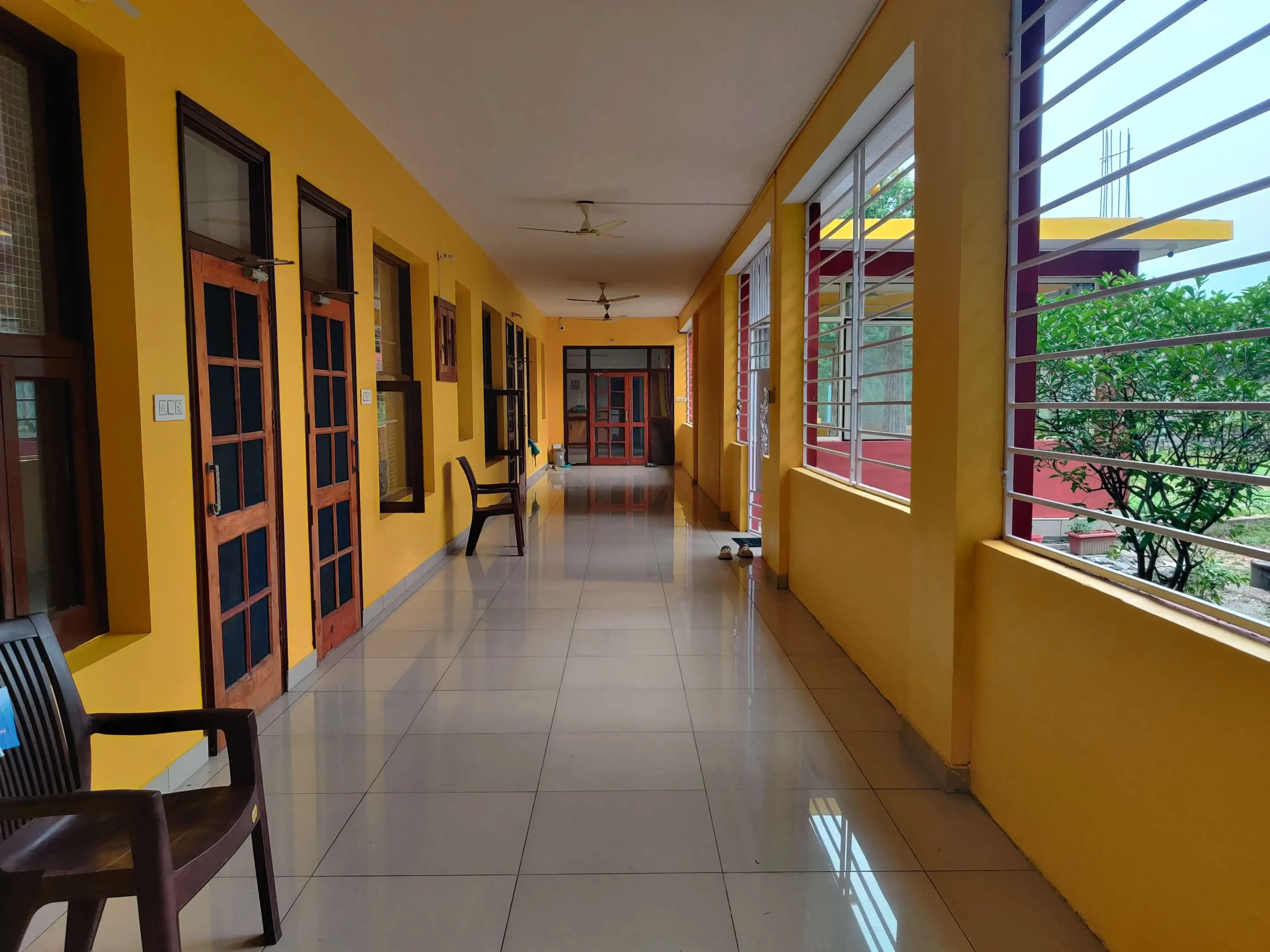
Shared and private rooms with attached or shared bathrooms, natural light, and views of the Dhauladhar range from most of the campus. Rooms are checked at admission and periodically thereafter, which residents are told about openly rather than being caught by surprise.
Home style vegetarian food prepared fresh on site, with non vegetarian on set days, and Jain, satvik and regional preferences accommodated on request. Nutrition matters clinically here, because women arriving after long term alcohol or drug use are often deficient in thiamine, iron, calcium and vitamin D, and the diet is planned with that in mind.
Yes, and yes, deliberately. Fixed wake time, meals, therapy blocks, activity and lights out. Structure is one of the working parts of residential treatment, because chaotic sleep and unstructured days are strongly associated with relapse. It stops feeling like a rulebook after the first fortnight.
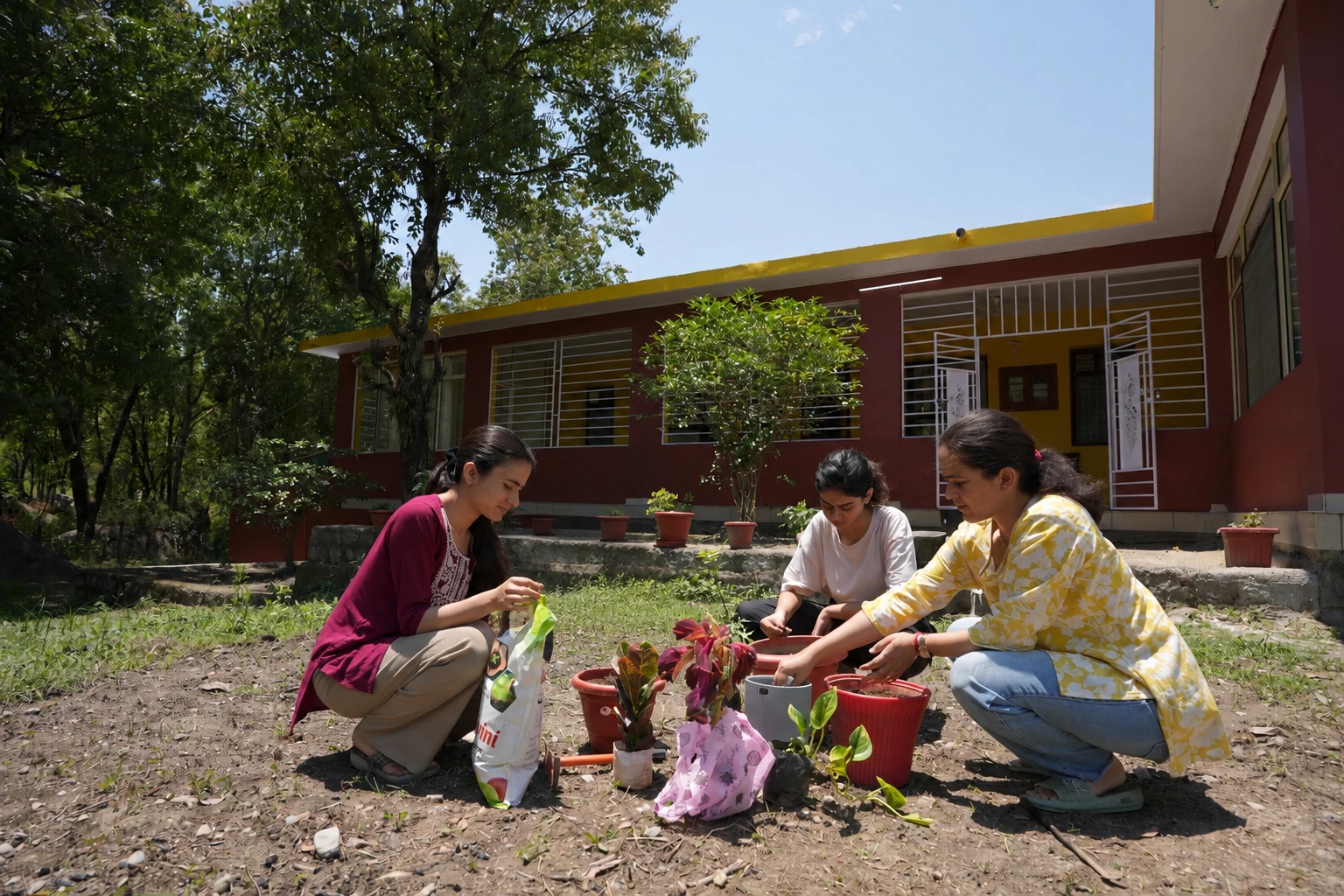
Yoga and meditation daily, walking within the campus, indoor games, art and expressive therapy, music, gardening, journalling and reading. Kangra valley weather permits outdoor time for most of the year, and supervised outdoor activity is part of the programme rather than a treat.
In the early phase, no, because detox and the first weeks of therapy need her full attention and unrestricted device access undermines both. Later in the programme, supervised study or limited remote work can be arranged case by case for students and working professionals. Discuss it with the clinical team at admission rather than assuming either answer.
Yes, a dedicated female attendant can be arranged where there is a medical or mobility need, at additional cost. Most residents do not require one, since nursing and attendant staff are present throughout.
Yes, laundry and housekeeping are provided. Residents are also expected to keep their own space in order, because reestablishing daily self care is part of the recovery work rather than a chore we are outsourcing.
Palampur is pleasant from March to June, wet through the monsoon, and genuinely cold from November to February with temperatures near freezing at night. Pack warm layers, a jacket, socks and closed shoes for winter admissions, and light cottons plus a raincoat for summer and monsoon. On a six month programme she will pass through two seasons, so send the second set of clothes across later instead of packing for the whole stay at admission.
Hindi, Punjabi, Pahari and English. Between the team we can also usually arrange support in other Indian languages, so tell us at admission if she is more comfortable in one we have not listed.
Tell us in advance and we will assess and allocate accordingly. Ground floor rooms and additional assistance can be arranged, and older residents are given a modified activity schedule.
Yes. Prayer, personal religious practice and reasonable dietary observance are respected. Medical fasting restrictions are the one exception, since some fasts are unsafe during detox or with certain medications, and the doctor will explain if that applies to her.
Books yes, and encouraged. Phones and laptops are restricted in the early phase and reintroduced progressively. If she needs a device for a genuine study or work requirement, discuss it at admission so the clinical team can plan supervised access rather than refusing on the spot.
Not during the early phase. Later in the programme, planned outings with staff accompaniment, family visits outside the campus, and structured reintegration steps are part of preparing her to go home. These are clinical decisions made with her progress in mind, not a privilege system.
Our residents range from women in their twenties to women in their sixties, and the mix changes month to month. Age variety is clinically useful, because a younger woman hearing an older resident describe twenty lost years often does more than a therapist can in the same week.
They are marked. Diwali, Holi, Lohri and birthdays are celebrated at the centre, because a woman learning to enjoy an occasion without a drink is doing real recovery work, and the first sober festival is a milestone worth having.
Discharge, aftercare and relapse
What happens when she leaves, how the first year is supported, and what to do if she uses again.
Discharge is planned weeks in advance, not announced on the day. It includes a relapse prevention plan written with her, a family session covering what changes at home, aftercare appointments already booked, a medication plan if she is on any, and a named contact she can call. A discharge with none of these is just an exit.
Scheduled follow up calls, ongoing counselling in person or online, family review sessions, help joining a local AA, NA or women's support group, and an open line for the family when something feels wrong. The first year after discharge is where recovery is either consolidated or lost, and it deserves as much attention as the residential stay.
Structured follow up runs for the first year, with the contact heaviest in the first three months. Beyond that, women stay in touch as they wish, and many do. There is no point at which she stops being able to call us.
Skipping counselling or meetings, secrecy returning, contact resuming with people she used with, irritability and sleep disruption, romanticising the past, isolation, and the phrase that one drink would be fine now. Relapse is usually a process over weeks, not a single sudden event, and families who know the early signs can intervene while it is still reversible.
Call us, and do it early rather than after a month of hoping. Do not stage a family trial, do not tell her the treatment was wasted, and do not withdraw contact. A rapid return to support after a slip very often prevents a full return to use. Whether she needs a short readmission or intensified outpatient support is a clinical judgement we will help you make.
No. Addiction is a chronic relapsing condition and relapse rates are comparable to those for other chronic illnesses such as hypertension and diabetes, where nobody concludes that treatment failed. What predicts long term recovery is not a flawless record but how fast she gets back into treatment when things slip.
Usually not. Some women take craving reducing or mood stabilising medication for a defined period, others for longer where there is an underlying psychiatric condition, and many take none after the early phase. This is a decision the treating psychiatrist reviews with her over time, not a fixed sentence handed out at discharge.
Yes, and returning to purposeful activity is protective, not risky. The timing matters, and going straight back into a high stress environment in week one is a common mistake. The discharge plan sets out a graded return that fits her job or her course.
That is common by the time a family reaches us, and it is dealt with honestly rather than glossed over. Couples and family sessions work on rebuilding communication and trust at a realistic pace. Some marriages recover well. Some do not, and where that is the outcome, our job is to help her build a stable life either way rather than to save the marriage at her expense.
Yes. Most of our residents live outside Himachal, so aftercare is designed to work remotely, with video and phone sessions, and referral to a trusted psychiatrist or counsellor near her home city. We do not hand a family from Ludhiana or Jammu a follow up plan that requires a five hour drive.
Both, with her consent. Families are part of the aftercare plan because they are the early warning system and the daily environment. Confidentiality still applies, so what we share is agreed with her rather than assumed.
Reaching Palampur and local questions
Where we are, how to get here from Delhi, Chandigarh, Punjab and Jammu, and why families choose the mountains.
Vaishalya Wellness is at Mohal, Gugga Saloh Road, Tehsil Sullah, Palampur, Kangra district, Himachal Pradesh 176102. It sits in the Kangra valley with the Dhauladhar range in view, quiet, green, and away from town, which is the point. Send us a WhatsApp message and we will share a live location pin.
Yes. Gaggal airport, also called Kangra or Dharamshala airport, is roughly 14 km away and has daily flights from Delhi. That makes us a genuine fly in option for families from Mumbai, Bangalore, Hyderabad, Kolkata and abroad, not only a drive in centre for the north.
By road it is roughly 480 to 500 km and 10 to 11 hours via the Ambala, Chandigarh and Una route, and overnight Volvo coaches run from Delhi to Palampur and Dharamshala daily. By air it is about 90 minutes to Gaggal, then a 30 minute drive. Many Delhi NCR families fly in and drive back.
Chandigarh is roughly 4.5 to 5 hours by road. Jalandhar is about 4 hours, Ludhiana about 5, Amritsar about 5.5, and Pathankot about 2.5. Ambala and Panchkula are 5 to 6 hours. For most of Punjab and Haryana, this is a comfortable single day drive, which is why so many families here come from those states.
Jammu is roughly 5 to 6 hours by road via Pathankot. From Dehradun it is around 9 to 10 hours by road, and flying via Delhi to Gaggal is usually easier. We arrange pickup from Pathankot and Chakki Bank railway stations for families coming by train.
Pathankot and Chakki Bank are the main broad gauge railheads, about 2.5 hours away, and we arrange pickup from both. The Kangra Valley narrow gauge line also has a station at Palampur, which is charming and slow, and not what you want on an admission day.
Two reasons, one clinical and one practical. Clinically, distance breaks the supply chain and the social circle, and a woman cannot walk out at 9 pm to the shop she has always used. Practically, it gives the family privacy that a centre twenty minutes from your colony cannot. The quiet and the walking also do real work for sleep, anxiety and mood, which is not a marketing claim but a consistent observation.
Yes. Kangra district is among the calmer parts of north India, Palampur is a small tea growing town, and the campus itself is secured with staff present at all times. Families visiting from cities usually comment that it is quieter than they expected.
Yes. Palampur and nearby Dharamshala and Bir have a good range of hotels and homestays across price points, and we will suggest options close to the centre. Many families stay one night, complete the admission, and drive back the next morning.
Yes. We take admissions from Maharashtra, Gujarat, Karnataka, Telangana, West Bengal and the north east, and from Indian families abroad. For fly in admissions we coordinate the Gaggal or Delhi pickup and handle the logistics so the family is not managing it at a distance.
We are a licensed private facility registered under the applicable Himachal Pradesh authority and the Mental Healthcare Act framework, which is a different thing from a government run centre. Ask to see our registration when you visit. We would encourage you to ask this of every centre you are considering, and to be suspicious of any that answers vaguely.
Honestly, that depends on where you are and what she needs, and we are not going to claim we are the right answer for everyone. What we can say is what we are: a genuinely women only residential centre in Himachal Pradesh with female staff, qualified clinical supervision and small resident numbers. If you are searching for a rehab near me and you are in Kangra, Palampur, Dharamshala, Mandi, Hamirpur, Una or Chamba, we are the closest women only option. If you are further away, ask us the five questions in the safety section and compare us properly against your local centres.
Yes. Ask us on WhatsApp and we will send current photographs of the residential area, dining space, therapy rooms and grounds, and arrange a video walkthrough with a counsellor if you cannot travel first.
हिंदी में पूछे जाने वाले सवाल
अक्सर पूछे जाने वाले सवाल, हिंदी में, उन परिवारों के लिए जो अंग्रेज़ी में पढ़ना नहीं चाहते।
जी हाँ। वैशाल्य वेलनेस पालमपुर, हिमाचल प्रदेश में केवल महिलाओं के लिए बना पुनर्वास केंद्र है। यह किसी पुरुष केंद्र का महिला वार्ड नहीं है। आवासीय हिस्से में नर्सिंग और देखभाल स्टाफ महिलाएँ ही हैं, चौबीसों घंटे।
पहले डॉक्टर की निगरानी में डिटॉक्स होता है, जिसमें शराब छोड़ने पर आने वाले लक्षण दवा से नियंत्रित किए जाते हैं। उसके बाद असली इलाज शुरू होता है, यानी काउंसलिंग, सीबीटी थेरेपी, ग्रुप सेशन और परिवार की काउंसलिंग। सिर्फ डिटॉक्स से लत नहीं छूटती, इसलिए कम से कम तीन महीने का कार्यक्रम सलाह दी जाती है।
नहीं, और यह खतरनाक है। शराब अचानक बंद करने पर दौरे पड़ सकते हैं और डेलीरियम ट्रीमेंस जैसी जानलेवा स्थिति बन सकती है। नींद की गोलियों और चिट्टे के मामले में भी यही बात लागू होती है। घर पर बंद कराने की कोशिश में ज़्यादातर लोग वापस उसी जगह पहुँच जाते हैं जहाँ से शुरू किया था।
चिट्टा पंजाब और आसपास के इलाकों में हेरोइन के लिए इस्तेमाल होने वाला नाम है, जो अक्सर मिलावटी होता है। इसकी लत बहुत जल्दी लगती है और मात्रा का अंदाज़ा न होने से ओवरडोज़ का खतरा रहता है। इलाज डॉक्टर की निगरानी में विदड्रॉल मैनेजमेंट से शुरू होता है, फिर तलब कम करने की दवा और मनोवैज्ञानिक इलाज चलता है। इसमें आमतौर पर 90 दिन या उससे ज़्यादा का समय लगता है।
मानसिक स्वास्थ्य देखभाल अधिनियम 2017 के अनुसार बालिग व्यक्ति अपने इलाज के लिए खुद सहमति देता है। बहुत सीमित हालात में, जब व्यक्ति फैसला लेने की स्थिति में न हो और जान को खतरा हो, तब मेडिकल आकलन के आधार पर भर्ती का प्रावधान है। हमारा अनुभव यह है कि ज़बरदस्ती की गई भर्ती टिकती नहीं। हम परिवार को समझाने की सही तैयारी करवाते हैं, और यह तरीका कहीं ज़्यादा कारगर रहता है।
फीस कमरे के प्रकार और कार्यक्रम की अवधि पर निर्भर करती है। मासिक शुल्क में रहना, खाना, नर्सिंग देखभाल, डॉक्टर और मनोचिकित्सक की जाँच, थेरेपी और सामान्य दवाएँ शामिल हैं। सही आँकड़े के लिए फोन कीजिए, हम आपको लिखित में पूरा ब्यौरा देंगे ताकि बाद में कोई छिपा हुआ खर्च सामने न आए।
30 दिन में डिटॉक्स और शुरुआती स्थिरता आती है, 90 दिन में व्यवहार में बदलाव टिकना शुरू होता है, और छह महीने में दोबारा नशा शुरू होने की आशंका सबसे कम रहती है। 15 दिन में पूरी लत छुड़ाने का दावा करने वाली जगह से बचिए।
जी हाँ। शुरुआती दो हफ्तों के बाद तय दिनों पर परिवार मिल सकता है, और पहले हफ्ते से ही निगरानी में फोन पर बात शुरू हो जाती है। शुरू के दिनों में मुलाकात इसलिए सीमित रखी जाती है क्योंकि उसी समय मरीज़ घर लौटने के लिए सबसे ज़्यादा दबाव डालती है।
पूरी तरह। मरीज़ का नाम, बीमारी और भर्ती की जानकारी सिर्फ इलाज करने वाली टीम और परिवार के नामित सदस्य तक सीमित रहती है। हम मरीज़ों की तस्वीरें या कहानियाँ प्रचार में इस्तेमाल नहीं करते। कोई फोन करके पूछे कि वह यहाँ भर्ती है या नहीं, तो हम पुष्टि नहीं करते।
जी हाँ, और हमारे यहाँ ज़्यादातर परिवार इन्हीं जगहों से आते हैं। परिवार जानबूझकर हिमाचल का केंद्र चुनते हैं ताकि मरीज़ उस माहौल, उन दोस्तों और उस सप्लाई से दूर हो जाए जिसने लत बनाए रखी थी। जालंधर से लगभग 4 घंटे, चंडीगढ़ से 5 घंटे और दिल्ली से 10 घंटे का रास्ता है।
जी हाँ, और भारत में महिलाओं के बीच यह सबसे कम पहचानी जाने वाली समस्या है। एल्प्राज़ोलम जैसी दवाओं की लत हफ्तों में लग जाती है और अचानक बंद करने पर दौरे पड़ सकते हैं। इसे धीरे धीरे, डॉक्टर की निगरानी में कम किया जाता है। घर पर अपने आप बंद करना खतरनाक है।
जी हाँ। हम अकेले डिप्रेशन, एंग्ज़ाइटी और अन्य मानसिक बीमारियों के लिए भी भर्ती लेते हैं, और नशे के साथ जुड़ी मानसिक बीमारी का इलाज साथ में करते हैं। दोनों को अलग अलग देखने से इलाज अधूरा रह जाता है और दोबारा नशा शुरू होने की आशंका बढ़ जाती है।
जी हाँ। हमारा स्टाफ हिंदी, पंजाबी, पहाड़ी और अंग्रेज़ी बोलता है। मरीज़ को अपनी भाषा में बात करने में जो सहजता मिलती है, वह इलाज का हिस्सा है।
बस फोन कीजिए, +91 82194 74936 या +91 70181 48449 पर। पहले एक काउंसलर आपसे बात करेगा, बिना किसी शुल्क के, और ईमानदारी से बताएगा कि आवासीय इलाज ज़रूरी है या नहीं। ज़रूरत होने पर हम घर से गाड़ी भी भेज सकते हैं, जिसमें महिला अटेंडेंट साथ आती है।
यह सबसे ज़्यादा पूछा जाने वाला सवाल है, और डर की वजह भी साफ है। हमारे यहाँ मरीज़ को बंद कमरे में नहीं रखा जाता। उसका अपना कमरा होता है, तय दिनचर्या होती है, सुबह योग, फिर काउंसलिंग और ग्रुप थेरेपी, दोपहर आराम, शाम को गतिविधियाँ। नर्सिंग स्टाफ चौबीसों घंटे मौजूद रहता है और आवासीय हिस्से में सारा स्टाफ महिला है। जो केंद्र आपको अंदर देखने न दे, वहाँ भर्ती मत कराइए।
हमारे यहाँ बिल्कुल नहीं। मारना, बाँधना, भूखा रखना या ठंडे पानी से सज़ा देना इलाज नहीं, अत्याचार है, और यही वजह है कि परिवार नशा मुक्ति केंद्र के नाम से डरते हैं। हमारा तरीका मेडिकल और मनोवैज्ञानिक है। मरीज़ बेचैन या आक्रामक हो तो डॉक्टर उसे देखता है और प्रशिक्षित स्टाफ शांत करता है। मरीज़ शिकायत सीधे क्लिनिकल हेड तक पहुँचा सकती है।
यह नशे की तरह और कितने साल से चल रहा है, इस पर निर्भर करता है। 30 दिन में शरीर से नशा निकलता है और हालत स्थिर होती है। 90 दिन में आदतें बदलनी शुरू होती हैं। छह महीने में दोबारा नशा शुरू होने की आशंका सबसे कम रहती है। हम कम से कम तीन महीने की सलाह देते हैं। 15 दिन में पूरा इलाज होने का दावा झूठा है।
तीन चरणों में। पहले डॉक्टर की निगरानी में डिटॉक्स, जिसमें नशा छोड़ने पर आने वाले लक्षण दवा से नियंत्रित किए जाते हैं। फिर मनोवैज्ञानिक इलाज, यानी सीबीटी, व्यक्तिगत काउंसलिंग, ग्रुप थेरेपी और परिवार की काउंसलिंग। आखिर में रिलैप्स रोकने की तैयारी और डिस्चार्ज के बाद का फॉलोअप। सिर्फ दवा से लत नहीं छूटती और सिर्फ काउंसलिंग से शरीर की निर्भरता नहीं जाती, दोनों साथ चाहिए।
सीबीटी यानी संज्ञानात्मक व्यवहार थेरेपी, मोटिवेशनल इंटरव्यूइंग, व्यक्तिगत मनोचिकित्सा, ग्रुप थेरेपी, फैमिली थेरेपी और जिन्हें उपयोगी लगे उनके लिए 12 स्टेप कार्यक्रम। इनके साथ रोज़ाना योग, ध्यान, कला और शारीरिक गतिविधि भी चलती है। हर मरीज़ के लिए मिश्रण अलग तय होता है।
नहीं, और जो आपको ऐसी दवा बेच रहा है वह आपके साथ धोखा कर रहा है। बाज़ार में रंगहीन, गंधहीन पाउडर बेचे जाते हैं जो खाने में मिलाने का दावा करते हैं। इनका कोई वैज्ञानिक आधार नहीं है, इनमें क्या मिला है यह किसी को नहीं पता, और किसी को उसकी जानकारी के बिना दवा देना खतरनाक भी है और गैरकानूनी भी। तलब कम करने की असली दवाएँ मौजूद हैं, लेकिन वे डॉक्टर मरीज़ को उसकी जानकारी में देता है और थेरेपी के साथ देता है।
तुलसी, गिलोय, आँवला, अजवाइन जैसी चीज़ें सेहत के लिए ठीक हैं और शरीर को थोड़ा सहारा देती हैं, लेकिन शराब की निर्भरता का इलाज नहीं हैं। इंटरनेट पर जो लेख इन्हें रामबाण बताते हैं वे इसलिए लिखे जाते हैं ताकि आप कोई उत्पाद खरीदें। अगर पीने वाली महिला को सुबह हाथ काँपना, पसीना या घबराहट होती है तो निर्भरता बन चुकी है और घरेलू नुस्खों से वह नहीं जाएगी।
शराब, चिट्टा और नींद की गोलियों के मामले में नहीं। शराब अचानक बंद करने पर दौरे और डेलीरियम ट्रीमेंस हो सकते हैं जो जानलेवा है। नींद की गोलियाँ अचानक बंद करने पर भी दौरे पड़ सकते हैं। इसके अलावा घर पर वही माहौल, वही लोग और वही सप्लाई मौजूद रहती है, इसलिए ज़्यादातर कोशिशें कुछ ही दिनों में टूट जाती हैं।
नहीं, यह एक लाइसेंस प्राप्त निजी केंद्र है जो हिमाचल प्रदेश की संबंधित अथॉरिटी और मानसिक स्वास्थ्य देखभाल अधिनियम के तहत पंजीकृत है। सरकारी केंद्र मुफ्त या बहुत सस्ते होते हैं और जिन परिवारों के पास साधन नहीं हैं उनके लिए सही विकल्प हैं, पर वहाँ आमतौर पर लंबी प्रतीक्षा रहती है, महिलाओं के लिए बहुत कम बेड होते हैं और ठहरने की अवधि छोटी होती है। हमारे रजिस्ट्रेशन का प्रमाणपत्र आप आकर देख सकते हैं।
जी हाँ, और यही हमारा सबसे बड़ा फर्क है। यह किसी पुरुष केंद्र का महिला वार्ड नहीं है। आवासीय हिस्से में नर्सिंग, अटेंडेंट और हाउसकीपिंग स्टाफ हर शिफ्ट में महिला रहता है। पुरुष डॉक्टर सिर्फ तय समय पर क्लिनिकल एरिया में मरीज़ को देखते हैं, आवासीय हिस्से में अकेले नहीं जाते।
ओपिओयड की लत में आमतौर पर शराब से ज़्यादा समय लगता है और हम कम से कम 90 दिन की सलाह देते हैं। शुरुआत डॉक्टर की निगरानी में विदड्रॉल मैनेजमेंट से होती है, क्योंकि बिना निगरानी के यह तकलीफ इतनी तेज़ होती है कि ज़्यादातर लोग वापस नशे पर चले जाते हैं। इसके बाद तलब कम करने का इलाज और मनोवैज्ञानिक थेरेपी चलती है।
हिमाचल में गांजा और चरस को हानिरहित मान लिया जाता है क्योंकि यह यहीं उगता है, पर लगातार भारी सेवन से युवा महिलाओं में याददाश्त और एकाग्रता की दिक्कत, घबराहट, और कुछ मामलों में मानसिक बीमारी तक हो सकती है। इसकी निर्भरता ज़्यादातर मानसिक होती है, इसलिए इलाज में थेरेपी और दिनचर्या का हिस्सा सबसे बड़ा रहता है, और नतीजे अच्छे मिलते हैं।
जी हाँ, पर धीरे धीरे और डॉक्टर की निगरानी में। एल्प्राज़ोलम जैसी गोलियों की सहनशीलता हफ्तों में बन जाती है, इसलिए वही खुराक काम करना बंद कर देती है और मात्रा बढ़ती जाती है। इन्हें अचानक बंद करने पर दौरे पड़ सकते हैं, इसलिए खुराक योजना बनाकर कम की जाती है। भारत में गृहिणियों और नौकरीपेशा महिलाओं में यह सबसे कम पहचानी जाने वाली लत है।
पता चलते ही उसी वक्त डाँटिए मत, क्योंकि उससे बातचीत महीनों के लिए बंद हो जाती है। पहले किसी पेशेवर से सलाह लीजिए, क्योंकि चिट्टा, गांजा और गोलियों के लिए प्रतिक्रिया अलग अलग होती है। फिर एक शांत बातचीत कीजिए जिसका केंद्र सज़ा नहीं, उसकी सुरक्षा हो। दरवाज़ा खुला रखिए, वरना वह पूरी तरह छिप जाएगी।
बोतल मिलने के पल में नहीं, किसी शांत सुबह में बात कीजिए। जो आपने देखा वह बताइए, उस पर लेबल मत लगाइए, फिर चुप होकर उसे बोलने दीजिए। पहली बार इनकार मिलेगा, क्योंकि इनकार बीमारी का लक्षण है, ज़िद नहीं। उसके लिए बहाने बनाना और उसकी ज़िम्मेदारियाँ खुद उठाना बंद कीजिए, और किसी डॉक्टर से आकलन कराइए।
उम्र की वजह से इलाज बेअसर होगा, यह सोच सबसे बड़ी गलती है और इसी वजह से इस उम्र की महिलाओं का इलाज कभी नहीं हो पाता। बीस साल से पी रही महिला का भी इलाज होता है, बस मेडिकल जाँच ज़्यादा ज़रूरी होती है क्योंकि लिवर, दिल और याददाश्त पर असर देखना पड़ता है। बड़ी उम्र की महिलाएँ अक्सर इलाज में बेहतर करती हैं, क्योंकि नशे को लेकर उनका दुविधा भरा मन तब तक थक चुका होता है।
तुरंत हमें फोन कीजिए, महीना भर इंतज़ार मत कीजिए। घर में मुकदमा मत चलाइए, यह मत कहिए कि पैसा बर्बाद हो गया, और बातचीत बंद मत कीजिए। एक बार फिसलने के बाद जल्दी वापस इलाज में आना ही पूरी वापसी को रोकता है। यह बीमारी बार बार लौटने वाली है, ठीक जैसे शुगर या बीपी, और वहाँ कोई यह नहीं कहता कि इलाज बेकार गया।
जी हाँ। हम घर से, गग्गल हवाई अड्डे से और पठानकोट या चक्की बैंक रेलवे स्टेशन से गाड़ी भेजते हैं, और उसके साथ महिला अटेंडेंट आती है। हिमाचल, पंजाब, हरियाणा, चंडीगढ़ और दिल्ली एनसीआर के ज़्यादातर हिस्सों से यह सुविधा उपलब्ध है। दूरी के हिसाब से यात्रा शुल्क लगता है जो पहले ही बता दिया जाता है।
उदासी से ज़्यादा अक्सर चिड़चिड़ापन और गुस्सा दिखता है। बदन दर्द, सिरदर्द और थकान जिसकी कोई शारीरिक वजह न मिले, पसंद की चीज़ों में मन न लगना, बहुत ज़्यादा या बहुत कम सोना, लोगों से कटना, और खुद को बोझ समझना। भारतीय घरों में इन्हें आलस या बदमिज़ाजी समझकर सालों टाल दिया जाता है।
नींद पहले हफ्तों में सुधरती है, भूख और वज़न सामान्य होते हैं, लिवर के आँकड़े महीनों में बेहतर होने लगते हैं, त्वचा और चेहरा बदलता है, और घबराहट कम होती है। इससे बड़ी बात यह है कि पैसा बचता है, बच्चों के साथ रिश्ता लौटता है, और वह शर्म जो हर सुबह के साथ आती थी, धीरे धीरे खत्म होती है।
+91 82194 74936 और +91 70181 48449। दोनों नंबर रात में और छुट्टी के दिन भी उठाए जाते हैं, और फोन काउंसलर उठाता है, कोई कॉल सेंटर नहीं। व्हाट्सएप पर भी लिख सकते हैं, कई परिवारों को फोन पर बात करने से ज़्यादा आसान वही लगता है।
Hinglish mein poochhe jaane wale sawaal
Wahi sawaal jo log Google par Roman Hindi mein type karte hain, usi tarah likhe aur jawab diye gaye hain.
Marizon ko band kamre mein nahi rakha jata. Apna kamra, fixed routine, subah yoga, phir counselling aur group therapy, dopahar aaram, shaam ko activity. Nursing staff 24 ghante maujood rehta hai aur residential area ka poora staff mahila hai. Jo centre aapko andar dekhne na de, wahan bharti mat karaiye.
Bahut bada farak. Zyadatar jagah jo khud ko mahila centre kehti hain wo asal mein purush centre ka ek ladies ward hoti hai. Vaishalya Wellness sirf mahilaon ke liye bana residential centre hai, jahan har shift mein female staff hai. Yeh farak isliye maayne rakhta hai kyunki mixed centre se aurtein bahut jaldi treatment chhod ke chali jati hain.
Hamari fees 25,000 rupaye prati maah hai aur ismein baatcheet ho sakti hai. Ismein rehna, khana, nursing care, doctor aur psychiatrist ki jaanch, therapy aur routine dawaiyan shamil hain. Admission assessment fee, gaadi ka kharcha aur koi special test alag se lagta hai, aur poora hisaab bharti se pehle likhit mein diya jata hai.
Palampur, zila Kangra mein. Pura pata hai Mohal, Gugga Saloh Road, Tehsil Sullah, Palampur, Himachal Pradesh 176102. Gaggal airport yahan se lagbhag 14 km hai, Pathankot railway station kareeb 2.5 ghante, aur Chandigarh se gaadi se 5 ghante.
Pehle doctor ki nigraani mein detox hota hai, jismein sharab chhodne par aane wale lakshan dawa se control kiye jate hain. Uske baad asli kaam shuru hota hai, yaani counselling, CBT therapy, group session aur parivaar ki counselling. Sirf detox se lat nahi chhutti, isliye kam se kam 90 din ka programme sahi rehta hai.
Sharab, chitta aur neend ki goliyon ke maamle mein bilkul nahi. Sharab achanak band karne par daure aur delirium tremens ho sakte hain, jo jaanleva hai. Iske alawa ghar par wahi mahaul, wahi log aur wahi supply maujood rehti hai, isliye zyadatar koshishein kuch hi din mein toot jati hain.
Sirf dawa se nahi. Craving kam karne wali aur sharab se dur rakhne wali dawaiyan asal mein hoti hain aur hum unka istemal karte hain, lekin wo therapy ke saath kaam karti hain, therapy ki jagah nahi. Jo log bina therapy ke sirf goli se lat chhudane ka dawa karte hain, unke marizon mein wapas nashe par jaane ki dar sabse zyada hoti hai.
Nahi, aur jo aapko aisi cheez bech raha hai wo dhokha kar raha hai. Bazaar mein rangheen aur gandhheen powder beche jate hain jo khane mein milane ka dawa karte hain. Inka koi vaigyanik aadhar nahi hai, inmein kya mila hai kisi ko pata nahi, aur kisi ko uski jaankari ke bina dawa dena khatarnak bhi hai aur gairkanooni bhi.
Taiyari kar ke baat kijiye, tur-fur mein nahi. Do ya teen shaant parivaar ke log chuniye, pehle tay kar lijiye kaun kya kahega, ilzaam se nahi fikar se shuruaat kijiye, aur bed aur date pehle se book rakhiye taki use kisi kaal-panchi baat par haan nahi kehni pade. Hamare counsellor phone par yeh poori baatcheet aapke saath rehearse karte hain.
Bottle milne ke pal mein nahi, kisi shaant subah baat kijiye. Jo aapne dekha wo bataiye, us par label mat lagaiye, phir chup ho kar use bolne dijiye. Pehli baar inkaar milega, kyunki inkaar bimari ka lakshan hai, zid nahi. Uske liye bahane banana aur uski zimmedariyan khud uthana band kijiye, aur kisi doctor se aakalan karaiye.
Sabse pehle phone kijiye. Counsellor aapse baat karega, bina kisi shulk ke, aur imaandari se batayega ki residential ilaj zaroori hai ya bahar se counselling kaafi hogi. Zaroori hone par ek din mein date tay ho jati hai, aur hum ghar se gaadi bhej sakte hain jismein mahila attendant saath aati hai. Hum sirf 18 saal se upar ki mahilaon ko bharti karte hain.
Shuruaat doctor ki nigraani mein withdrawal management se hoti hai, kyunki bina nigraani ke chitta chhodne ki takleef itni tez hoti hai ki zyadatar log seedha wapas nashe par chale jate hain. Uske baad craving kam karne ka ilaj, psychological therapy aur relapse rokne ki tayari chalti hai. Opioid ki lat mein aam taur par 90 din ya usse zyada lagte hain.
Smack aur chitta dono heroin ke hi naam hain, isliye ilaj ek jaisa hai. Badan dard, aithan, naak behna, ulti, dast aur neend na aana withdrawal ke lakshan hain, jo dawa se control kiye jate hain. Ghar par yeh karne ki koshish lagbhag hamesha fail hoti hai, isliye pehle hafte ki nigraani sabse zaroori hissa hai.
Haan, hum 18 saal se upar ki ladkiyon aur mahilaon ko bharti karte hain. 18 se kam umar ki ladki ke liye hum bharti nahi karte, balki aapko sahi child aur adolescent service ki taraf bhejte hain. Kamre umar aur zaroorat dekh kar diye jate hain, isliye 22 saal ki ladki ko aam taur par 60 saal ki mahila ke saath nahi rakha jata.
Teen cheezein. Pehli, staff mahila hai, isliye wo baatein bhi ho pati hain jo purush ke saamne kabhi nahi hotin. Doosri, ilaj mein trauma, gharelu hinsa, hormonal sehat aur bachchon ki chinta ko jagah di jati hai, jo aam programme chhod dete hain. Teesri, aurat ka sharab ya nasha karna samaj mein jitna sharm ka vishay banaya jata hai, us par kaam kiya jata hai.
Paanch sawaal poochiye. Ilaj karne wale psychiatrist ka naam aur registration number kya hai. Kya main aaj residential area dekh sakta hoon. Aapka licence number kya hai. Parivaar se sampark ki likhit policy kya hai. Fees mein exactly kya shamil hai. In paanch mein se kisi par bhi gol-mol jawab mile, ya andar na jaane diya jaye, to aage badhiye.
Ek achha centre hospital se zyada ek ghar jaisa lagta hai. Kamre, dhoop, khulli jagah, dining hall, therapy rooms aur bahar chalne ki jagah. Hamare yahan Dhauladhar pahad saamne dikhte hain. Jo centre andheri, band aur bhari hui jagah lage, wahan ilaj nahi ho raha, sirf log rakhe ja rahe hain.
Medical centre mein doctor, psychiatrist aur nurse hote hain, isliye withdrawal ko dawa se surakshit tareeke se sambhala jata hai. Bina medical staff wale centre mein sirf attendants hote hain, jo sharab ya opioid withdrawal jaisi cheez ko sambhal hi nahi sakte, aur wahi jagah hain jahan se abuse ki khabrein aati hain.
30 din mein shareer se nasha nikalta hai aur haalat sthir hoti hai. 90 din mein aadat aur vyavhaar badalna shuru hota hai. Chhe mahine mein wapas nasha shuru hone ki sambhavna sabse kam rehti hai. 15 din mein poora ilaj hone ka dawa karne wali jagah se bachiye.
Turant phone kijiye, mahina bhar intezar mat kijiye. Ghar mein muqaddama mat chalaiye aur baatcheet band mat kijiye. Ek baar fisalne ke baad jaldi wapas ilaj mein aana hi poori wapasi ko rokta hai. Yeh bimari baar baar lautne wali hai, theek jaise sugar ya BP, aur wahan koi nahi kehta ki ilaj bekar gaya.
Haan, par dheere dheere aur doctor ki nigraani mein. Alprazolam jaisi goliyon ki tolerance hafton mein ban jati hai, isliye wahi khuraak kaam karna band kar deti hai aur matra badhti jati hai. Inhe achanak band karne par daure pad sakte hain, isliye khuraak yojna bana kar kam ki jati hai.
Haan. Hamara staff Hindi, Punjabi, Pahari aur English bolta hai, aur therapy usi bhasha mein hoti hai jismein mariz sahaj ho. Hum sirf depression, anxiety aur doosri mansik bimariyon ke liye bhi bharti lete hain, nashe ke bina.
Akele himmat se nahi, kyunki agar shareer nirbhar ho chuka hai to subah haath kaapna aur ghabrahat wapas pine par majboor kar deti hai. Sahi kram hai: pehle doctor se aakalan, phir nigraani mein detox, phir counselling jo yeh dekhe ki wo pi kyun rahi thi. Zyadatar mahilaon mein iske neeche depression, anxiety ya koi purana sadma nikalta hai.
Yeh aam baat hai, kyunki parivaar ko lagta hai baat bahar nikal jayegi. Do cheezein madad karti hain. Ek, unhe number dijiye aur khud counsellor se baat karwa dijiye, kyunki anjaan aadmi ki baat ghar walon ko jaldi samajh aati hai. Do, unhe yeh yakeen dilaiye ki bharti ki jaankari gupt rehti hai aur kisi ko nahi batayi jati.
Haan. 25,000 rupaye maasik fees ko lambe programme mein kishton mein baanta ja sakta hai, aur agar parivaar ki haalat tang hai to fees mein baatcheet bhi ho sakti hai. Hum yeh khud batate hain, aapko poochna nahi padta.
Jalandhar se lagbhag 4 ghante, Ludhiana se 5, Amritsar se 5.5, Pathankot se 2.5, Chandigarh se 5 aur Delhi se 10 se 11 ghante. Delhi se Gaggal ki flight lagbhag 90 minute ki hai aur phir 30 minute ki gaadi. Zyadatar parivaar isi liye Himachal chunte hain, kyunki doori khud ilaj ka hissa ban jati hai.
+91 82194 74936 aur +91 70181 48449. Dono number raat mein aur chhutti ke din bhi uthaye jate hain, aur phone counsellor uthata hai, koi call centre nahi. WhatsApp par bhi likh sakte hain.
Still deciding
If your question is not on this page, ask us directly.
One phone call, no pressure and no obligation. You speak to a counsellor who will tell you honestly whether residential treatment is right for her, or whether something less than that would do. If we are not the right place, we will say so and point you somewhere that is.
- Helpline
- +91 82194 74936
+91 70181 48449 - Address
- Vaishalya Wellness
Mohal, Gugga Saloh Road
Tehsil Sullah, Palampur
Kangra, Himachal Pradesh 176102 - Nearest airport
- Gaggal, Dharamshala. About 14 km.
- Directions
- Open in Google Maps
This page is general information about addiction and mental health treatment for women and is not a substitute for a medical consultation, diagnosis or prescription. Never stop alcohol, opioids or prescribed sedatives suddenly without medical supervision. If someone is in immediate danger, having a seizure, unresponsive or at risk of harming herself, call emergency services on 112 or the national mental health helpline Tele MANAS on 14416, or go to the nearest hospital straight away.

About Vaishalya Wellness
Set in the quiet foothills of the Dhauladhar range in Palampur, Vaishalya Wellness is a women only rehabilitation and recovery centre. We offer a safe, private and dignified space for women seeking professional help with addiction, trauma and mental health, guided by clinical care and genuine compassion.
A women only residential facility in Himachal Pradesh.
Registration No: 2025/238/4/186
What We Treat
Additional Info
Contact
Call us +91 82194 74936 +91 70181 48449
Mohal, Gugga Saloh Rd,Tehsil Sullah, Palampur,
Himachal Pradesh 176102 Get directions
© 2026 Vaishalya Wellness. All rights reserved.
Privacy Policy