




- Resources
- Volunteer
- Internship
- Our approach
- FAQ
Home›Alcohol Addiction in Women…
Alcohol Addiction Treatment for Women in Himachal Pradesh
On this page
This page explains how alcohol addiction develops in women, why it is so often missed, and how treatment works at Vaishalya Women's Wellness Centre in Palampur, Himachal Pradesh: who we treat, what a residential stay involves, which therapies we use and how to arrange admission.
Alcohol dependence in women is not a smaller version of the same problem men have. It develops faster, it damages the body at lower quantities, and it is hidden for far longer because of what being found out costs a woman in an Indian family.
We are a women-only residential centre. Every resident is a woman, and the clinical and counselling staff who work with her are women. Treatment here covers the whole arc: medical detox, therapy, physical recovery and a plan for going home.
Speak to us confidentially: +91 82194 74936 or +91 70181 48449.
Request a Confidential Call
Share as little or as much as you like. A senior member of our team will call you back. Nothing is shared with anyone outside the clinical team.
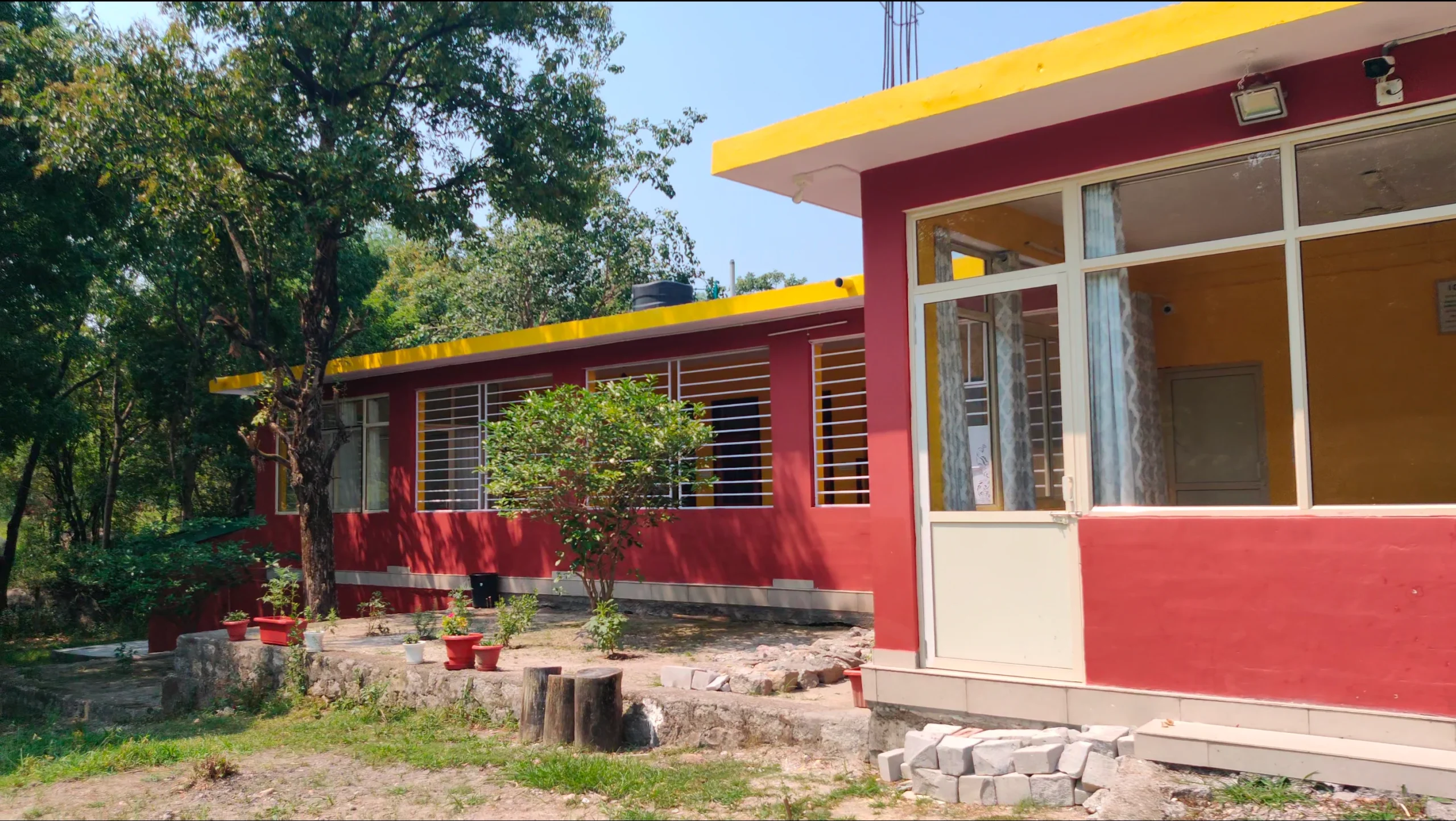
A Women's Alcohol Rehab and Addiction Treatment Centre in the Kangra Valley
Vaishalya Women's Wellness Centre is a residential addiction treatment centre for women in Mohal, near Palampur, in the Kangra valley of Himachal Pradesh. Admissions are deliberately limited so that every resident is genuinely known by the people treating her.
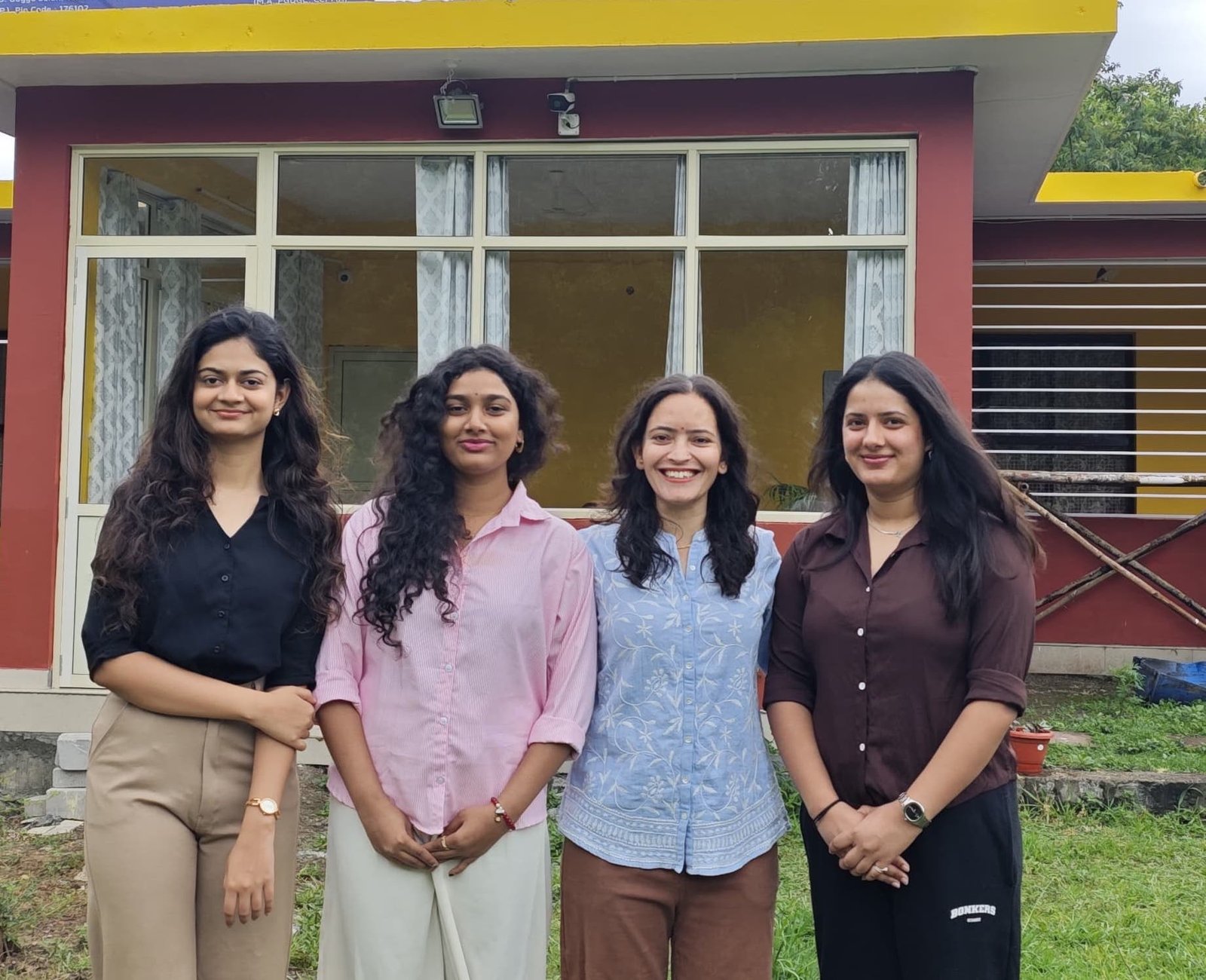
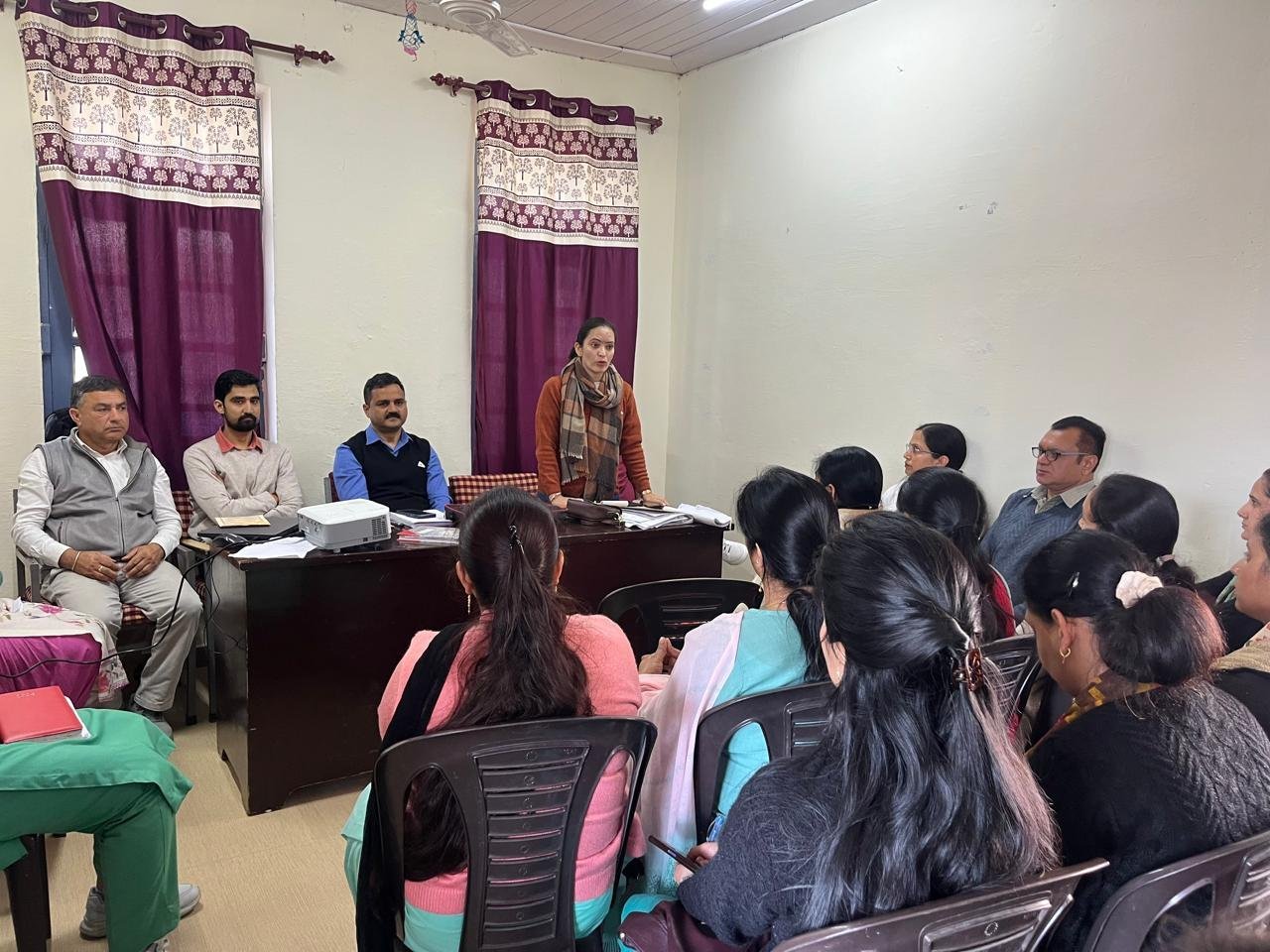
Care is led by Dr. Nitin Sharma, MBBS, alongside female counsellors and nursing staff. Treatment covers the full path: medically supervised detox, individual and group therapy, work on the depression, anxiety or trauma that so often sits underneath the drinking, physical recovery through yoga, nutrition and Ayurvedic support, and a plan for the return home.
This is not a place a woman is sent to be corrected. It is a place she is treated.
Who we treat
Who Comes to Vaishalya
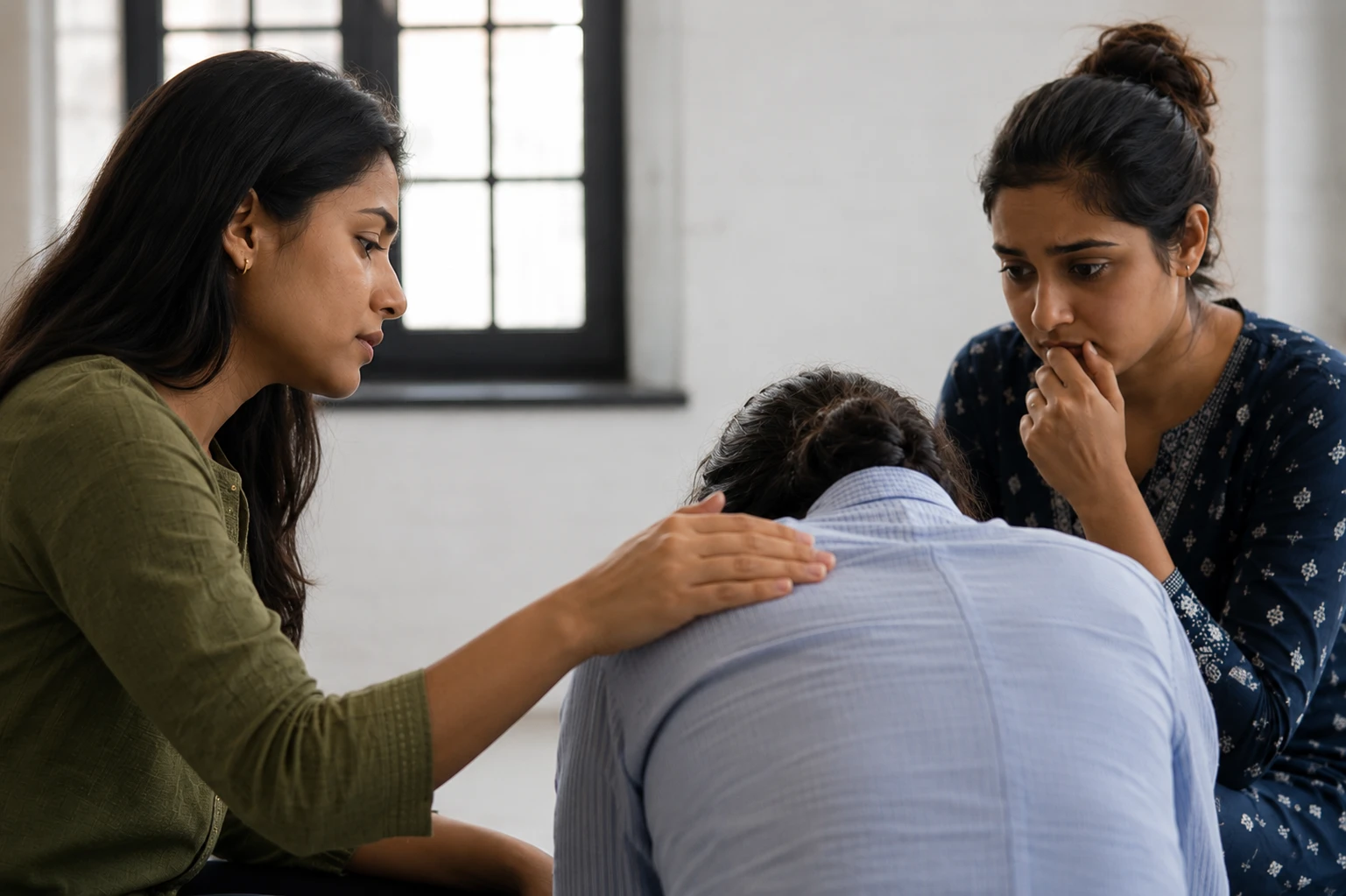
Treatment here is for adult women whose drinking has stopped being something they can manage on their own. That might mean drinking every day, repeated failed attempts to stop, shaking or nausea in the morning, or consequences that have become impossible to hide at home or at work.
Some women arrive with a clear alcohol use disorder that has been running for years. Others come earlier, having recognised a pattern that is escalating and having decided not to wait until it is worse. Both are welcome and neither is treated as a failure.
It is also very common for the drinking to be sitting on top of something else: depression, anxiety, a bereavement, chronic pain, a violent marriage, or years of caring for everyone else with nobody asking after her. Where that is the case, we treat both. Treating the alcohol alone and sending her back to the same untreated distress is how relapse is manufactured.
Admission is decided by clinical assessment, not by how bad the situation sounds on the phone.
The medicine of it
Why Alcohol Harms Women Faster
This is not a moral point and it is not about willpower. A woman drinking the same amount as a man is taking a measurably larger physiological hit, and the research on this is settled.
Higher Blood Alcohol per Drink
Women carry proportionally less body water than men, so the same quantity of alcohol is diluted less and reaches a higher concentration in the blood.
Less Breakdown in the Stomach
Women produce less of the gastric enzyme that starts breaking alcohol down before it is absorbed, so more of each drink enters the bloodstream intact.
Earlier Liver Damage
Alcohol-related liver disease, including alcoholic hepatitis and cirrhosis, develops in women at lower levels of intake and over shorter periods of drinking than in men.
Telescoping
Women tend to move from heavy drinking to dependence and serious harm in a shorter span of years. Clinicians call this telescoping, and it means the window to intervene is narrower.
Other Physical Risks
Alcohol raises breast cancer risk, and heart and brain effects appear at lower cumulative exposure in women. In pregnancy the risk transfers directly to the baby.
More Co-Occurring Illness
Depression, anxiety and post-traumatic stress occur at higher rates among women with alcohol dependence, and each one makes stopping harder without treatment.

Why it stays hidden
The Drinking Nobody in the House Talks About
A man who drinks heavily is visible. He drinks with other men, in the evening, outside the house. A woman does it quietly, at home, in the gaps of the day, and she covers it carefully, because what she stands to lose is not reputation alone. It is her marriage, her children, her place in a small town where everyone knows everyone.
So it goes on for years. Families often tell us they suspected something for a long time and could not name it, or named it and were met with a denial so firm they let it drop.
By the time she reaches us, the dependence is well established, the liver has usually taken more damage than the quantities would suggest, and she has been carrying the secret alone for so long that saying it out loud is itself a shock.
None of this means it is too late. It means the delay is the enemy, not the woman.
Recognising it
Signs of Alcohol Addiction in Women
If you are reading this about your wife, mother, daughter or sister, these are the patterns that matter more than the quantity she drinks.
Hiding and Drinking Alone
Bottles kept out of sight, drinking during the day when the house is empty, defensiveness or anger if the subject is raised.
Needing More for the Same Effect
The amount has climbed steadily over months or years. What used to be enough no longer touches it. This is tolerance, and it is a physical change.
Shaking or Nausea in the Morning
Trembling hands, sweating, retching or anxiety on waking that settles after a drink. This is withdrawal, and it means the body has adapted.
Trying to Stop and Failing
Repeated promises, repeated attempts, each lasting a few days. Failure here is not weak character. It is untreated physical dependence.
Drinking to Manage Feeling
Alcohol used for sleep, for grief, for anxiety, for getting through the evening. The drinking has become the treatment for something untreated.
The Body Showing It
Weight loss or gain, poor appetite, disturbed sleep, yellowing of the eyes, swelling, memory gaps or blackouts, or a run of unexplained falls and injuries.
If several of these are familiar, please do not wait for a crisis to force the decision. Call and describe it. The assessment is free and it is not a sales conversation.
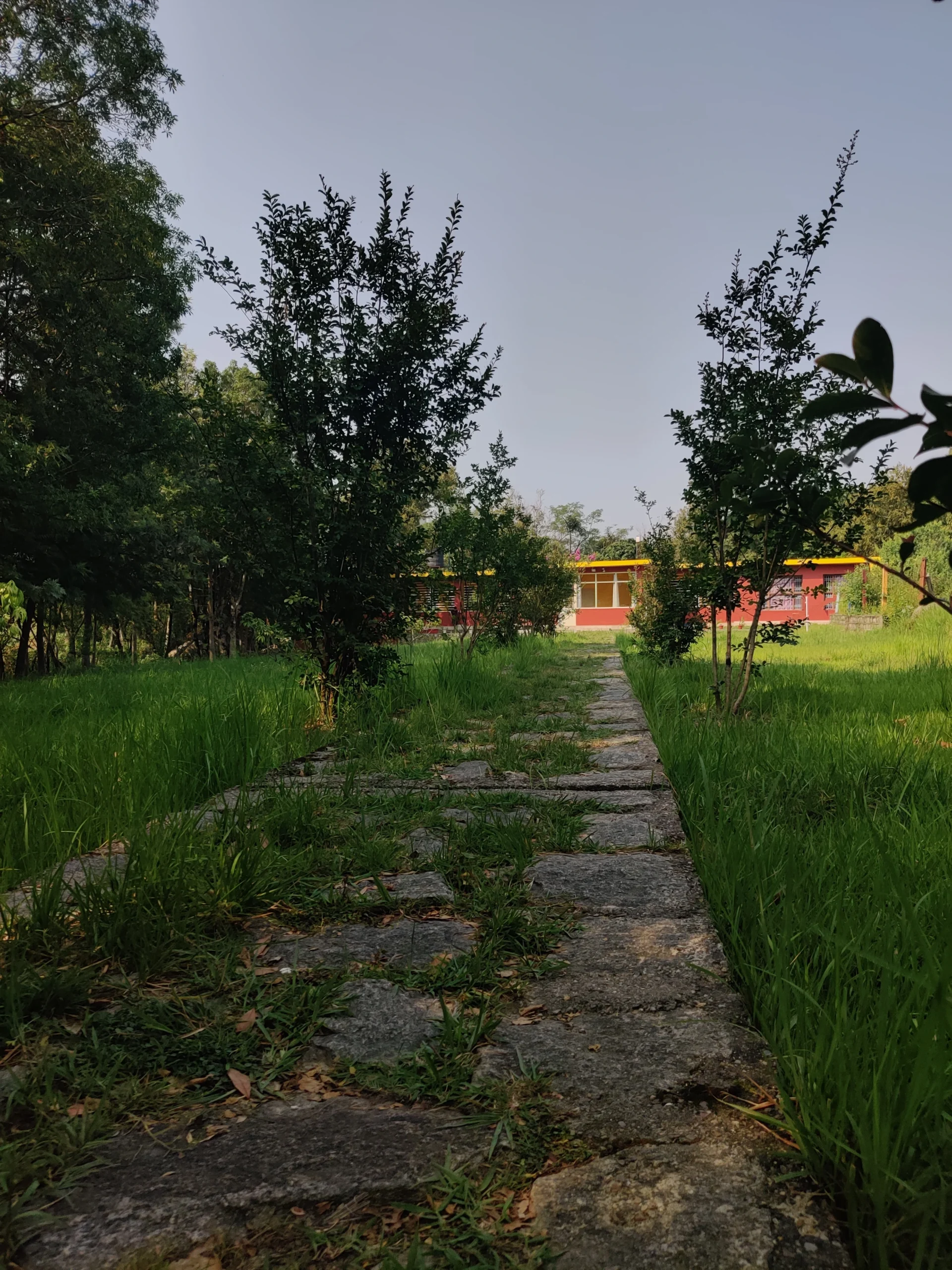
Inside Our Women's Centre in the Hills of Kangra
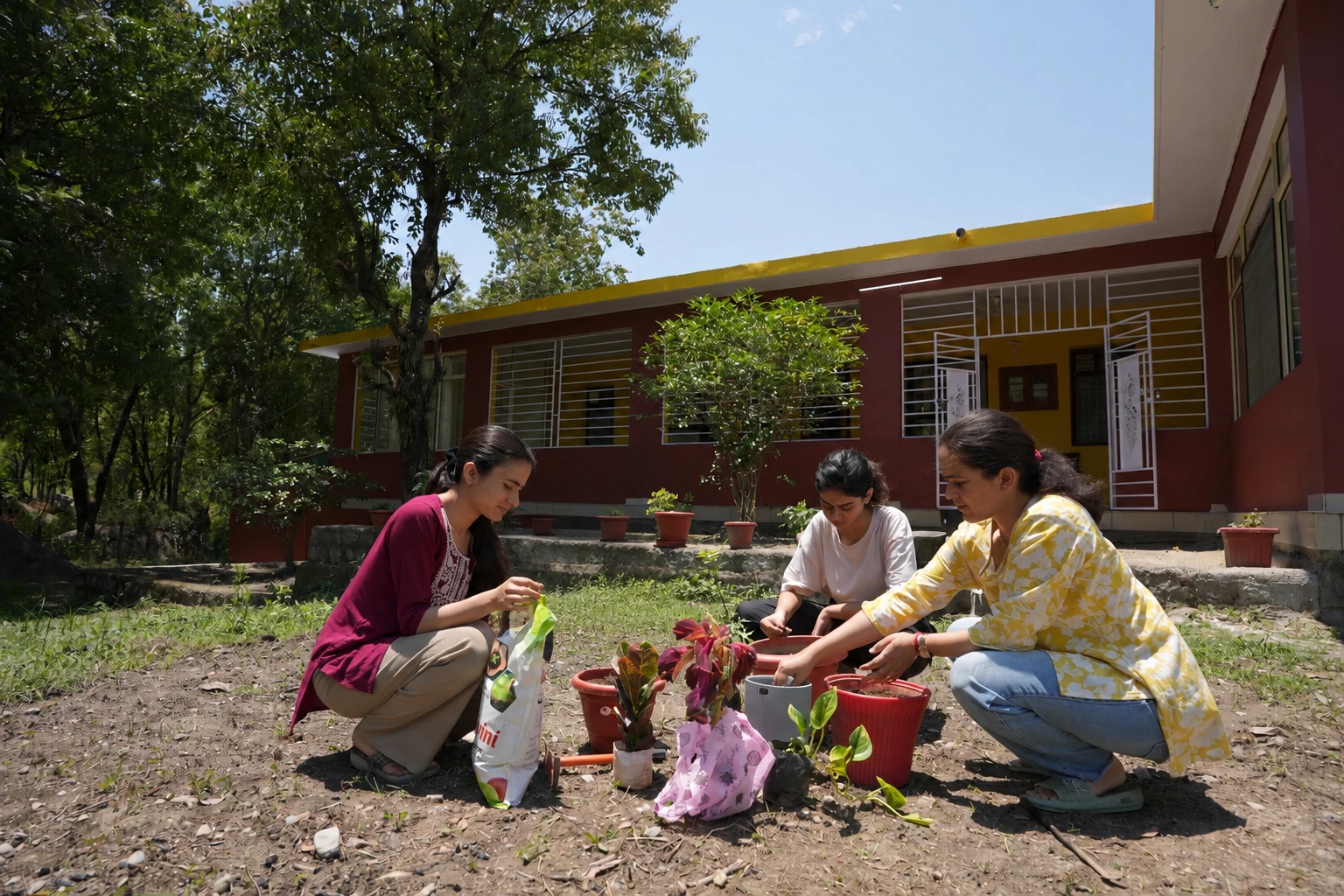
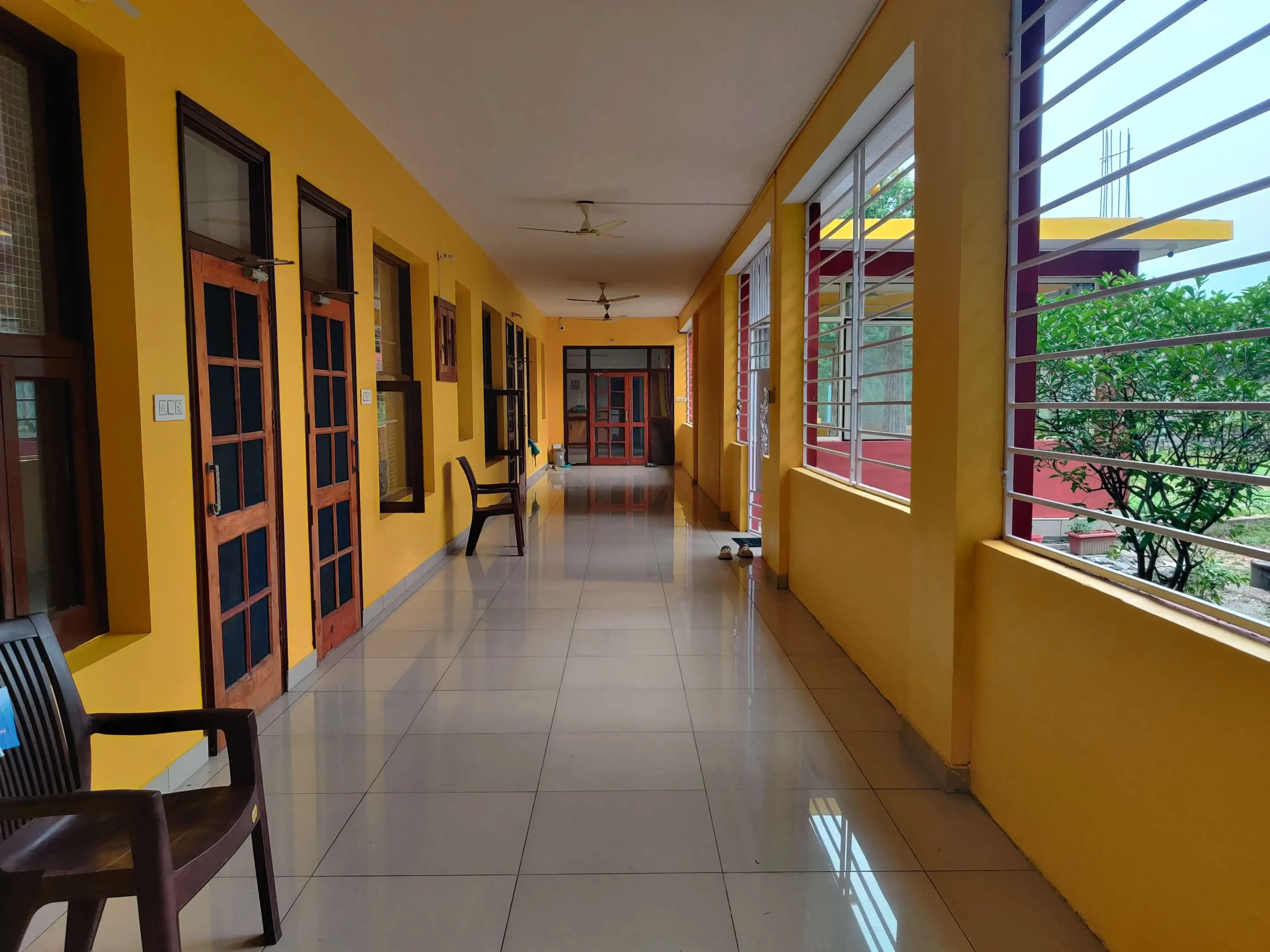
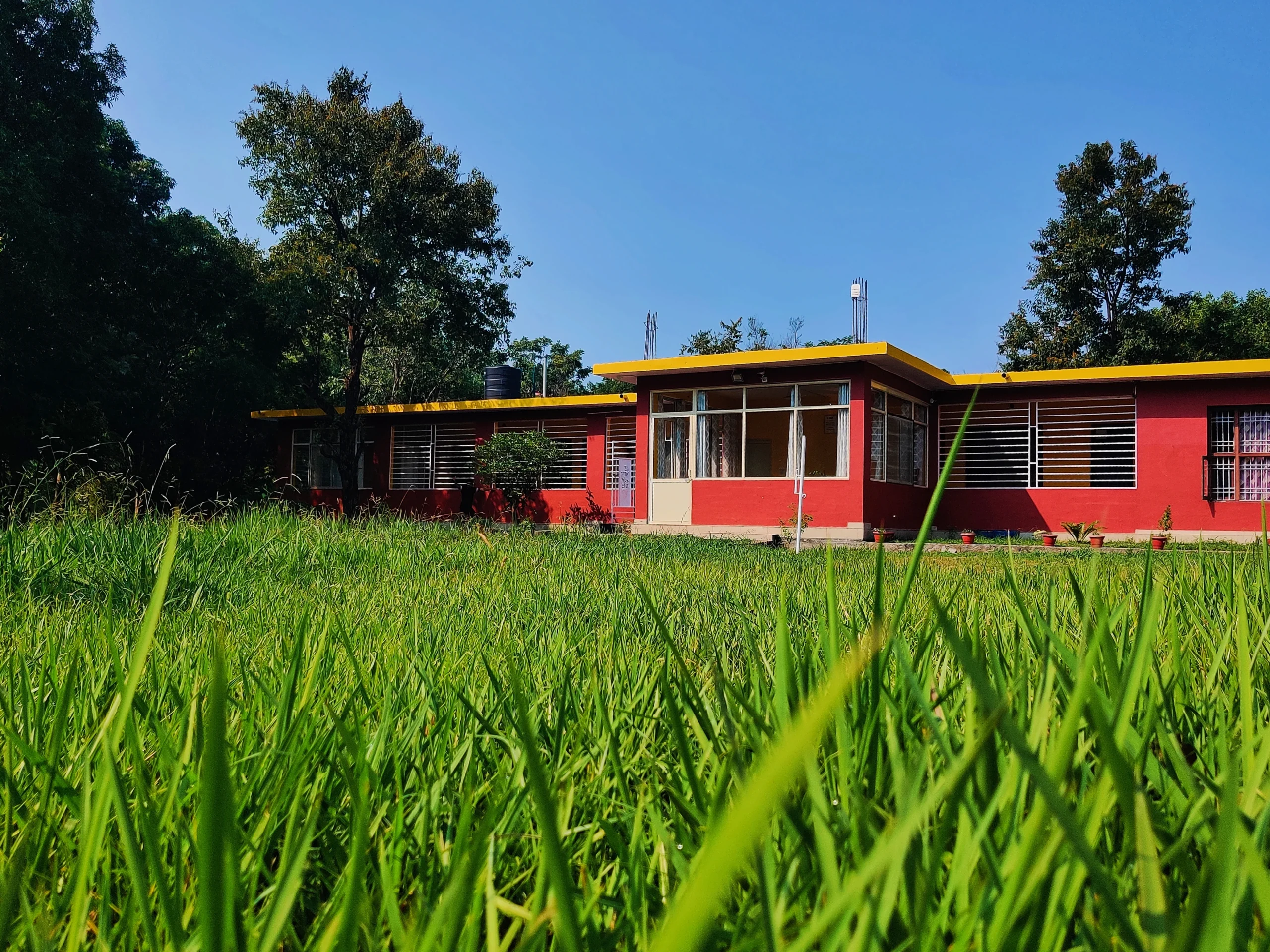
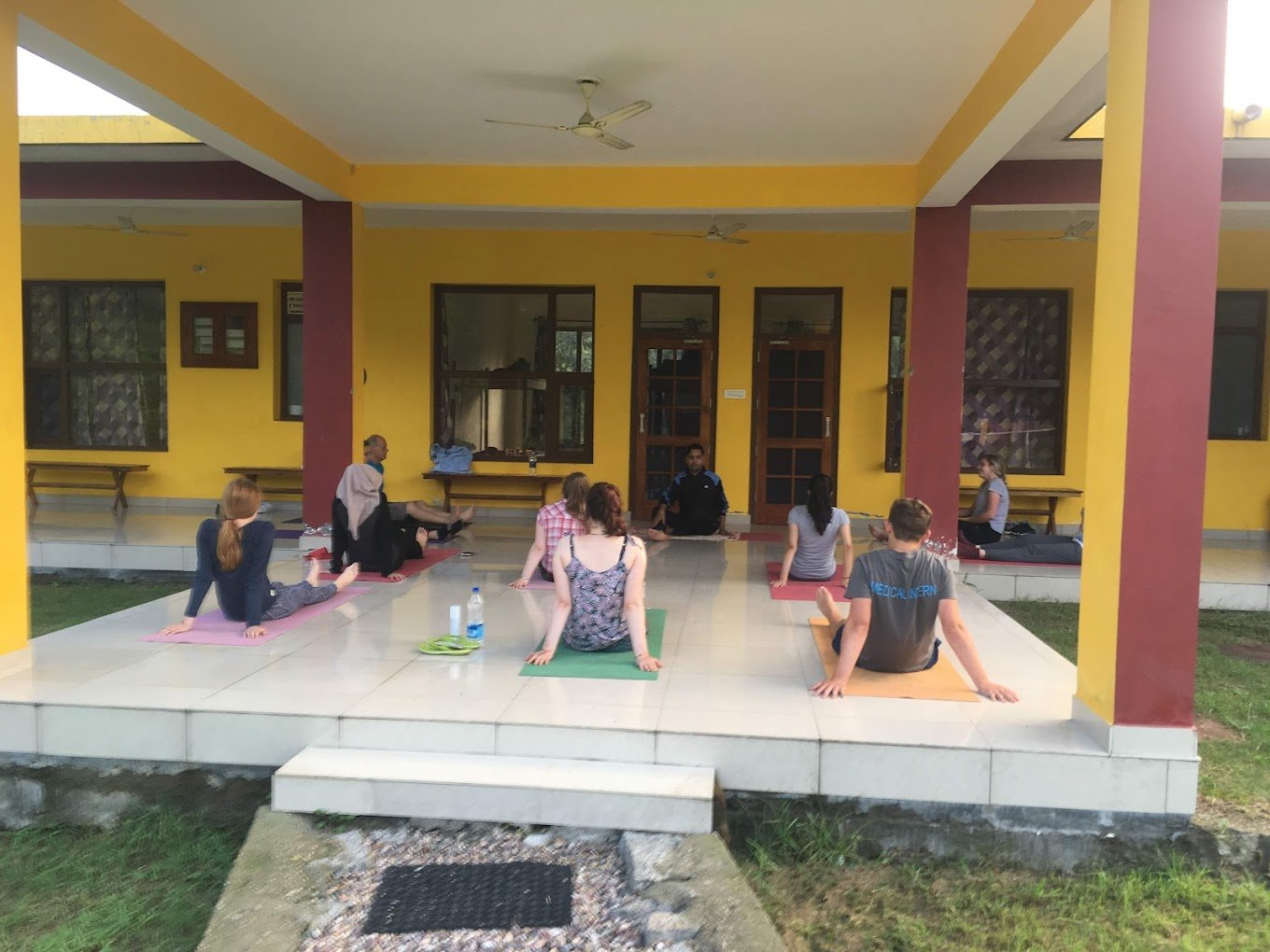
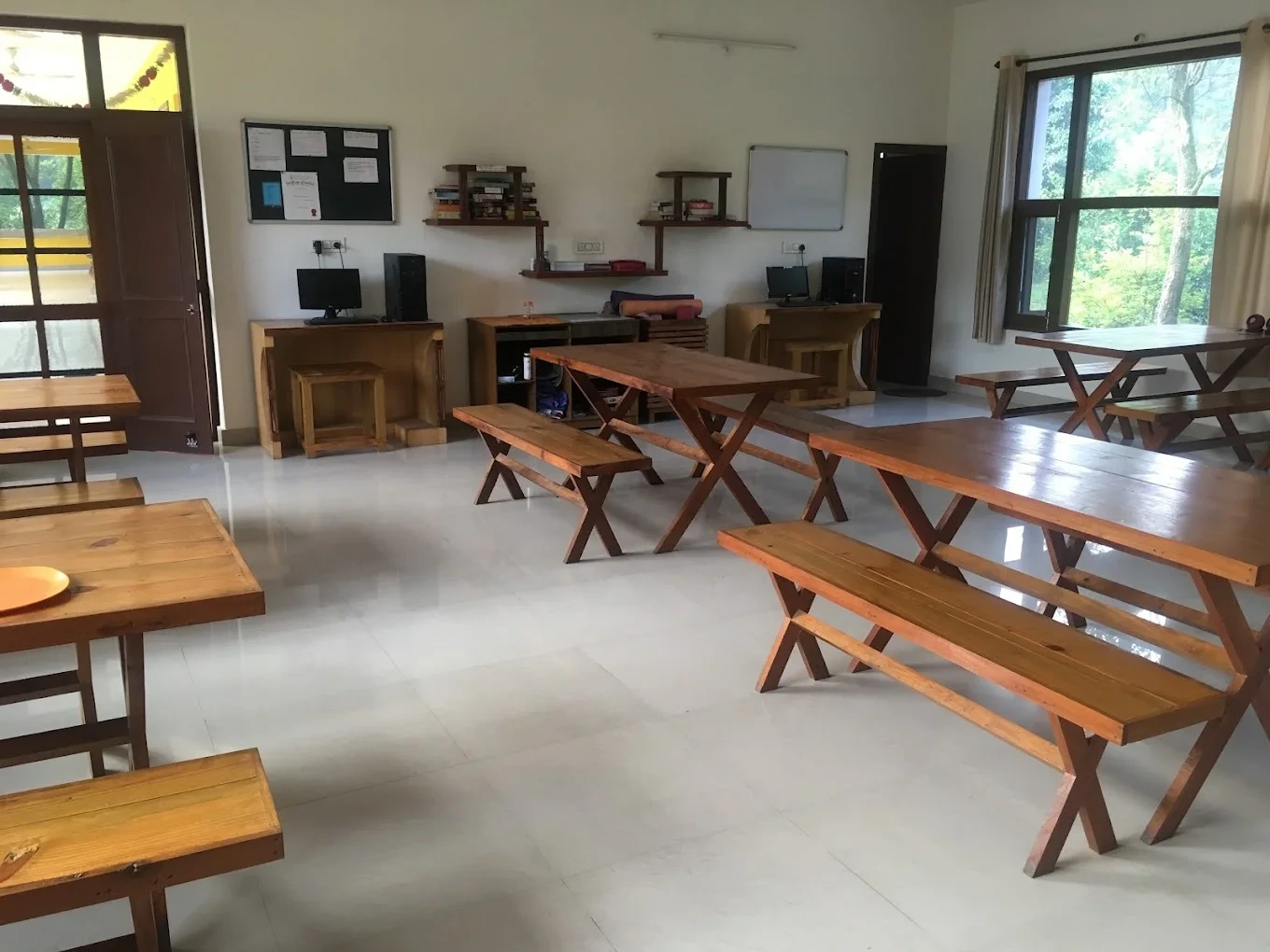
The centre sits above the valley near Palampur, quiet, green, and a long way from the noise that most residents arrive exhausted by. Everything about the layout is designed so that recovery does not feel like confinement.
- Clean, simple residential rooms with real privacy
- Gardens and open ground for walking, sitting and the daily routine
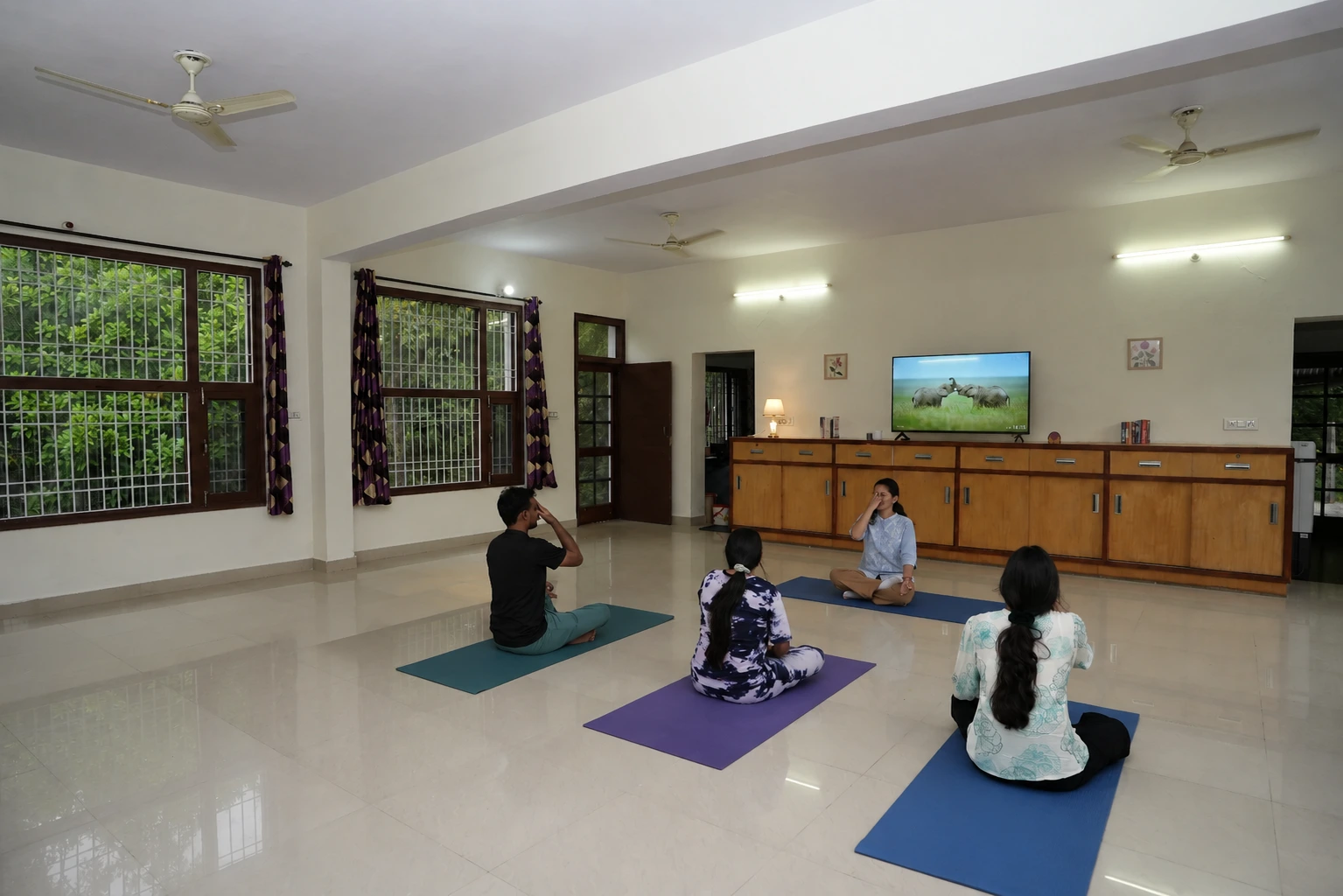
- A dedicated space for yoga, breathing practice and meditation
- Fresh meals cooked on site, planned around nutritional recovery
- Quiet common areas for group sessions and for family visits
The mountain setting is not decoration. Distance from the household, the routine and the availability of alcohol is a clinically useful part of early recovery, and it is much of the reason residential treatment works when home attempts have not.
Medically Supervised Alcohol Detox
For most women arriving with physical dependence, the first stage of treatment is a safe, medically supervised detox. This is not optional politeness. Stopping abruptly after long-term heavy drinking can cause seizures and, in a small number of cases, delirium tremens, which is a medical emergency.
Detox at Vaishalya is run under Dr. Nitin Sharma's supervision, with withdrawal medicated on a tapering schedule, thiamine given to protect against Wernicke's encephalopathy, and hydration and nutrition corrected from day one. Symptoms are tracked and medication adjusted against what is measured, not against how the day appears to be going.
Most women complete the acute phase in three to seven days. Longer is common where drinking has been heavy for years or where there is liver disease. Once the body is stable, the actual treatment begins.

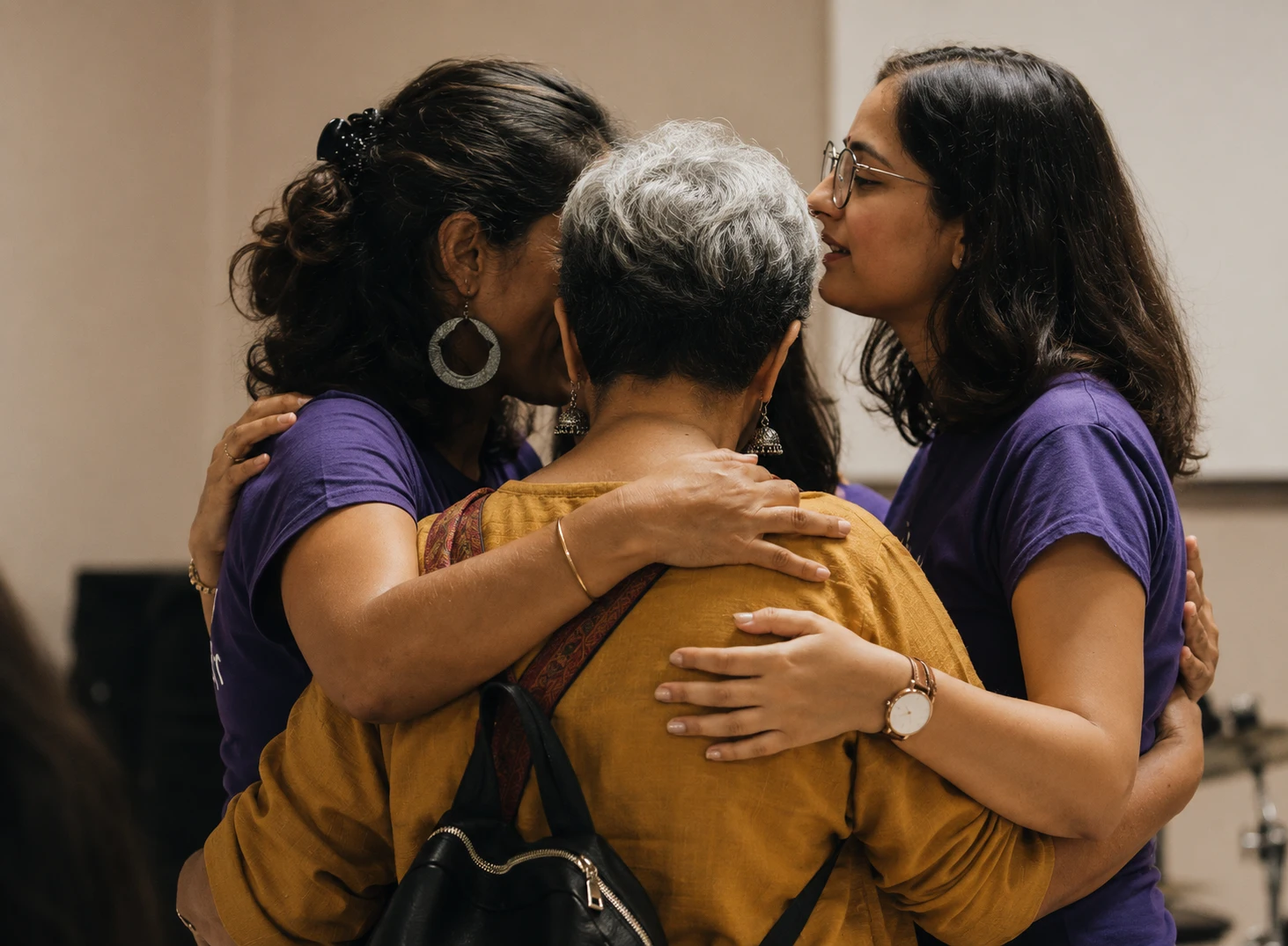
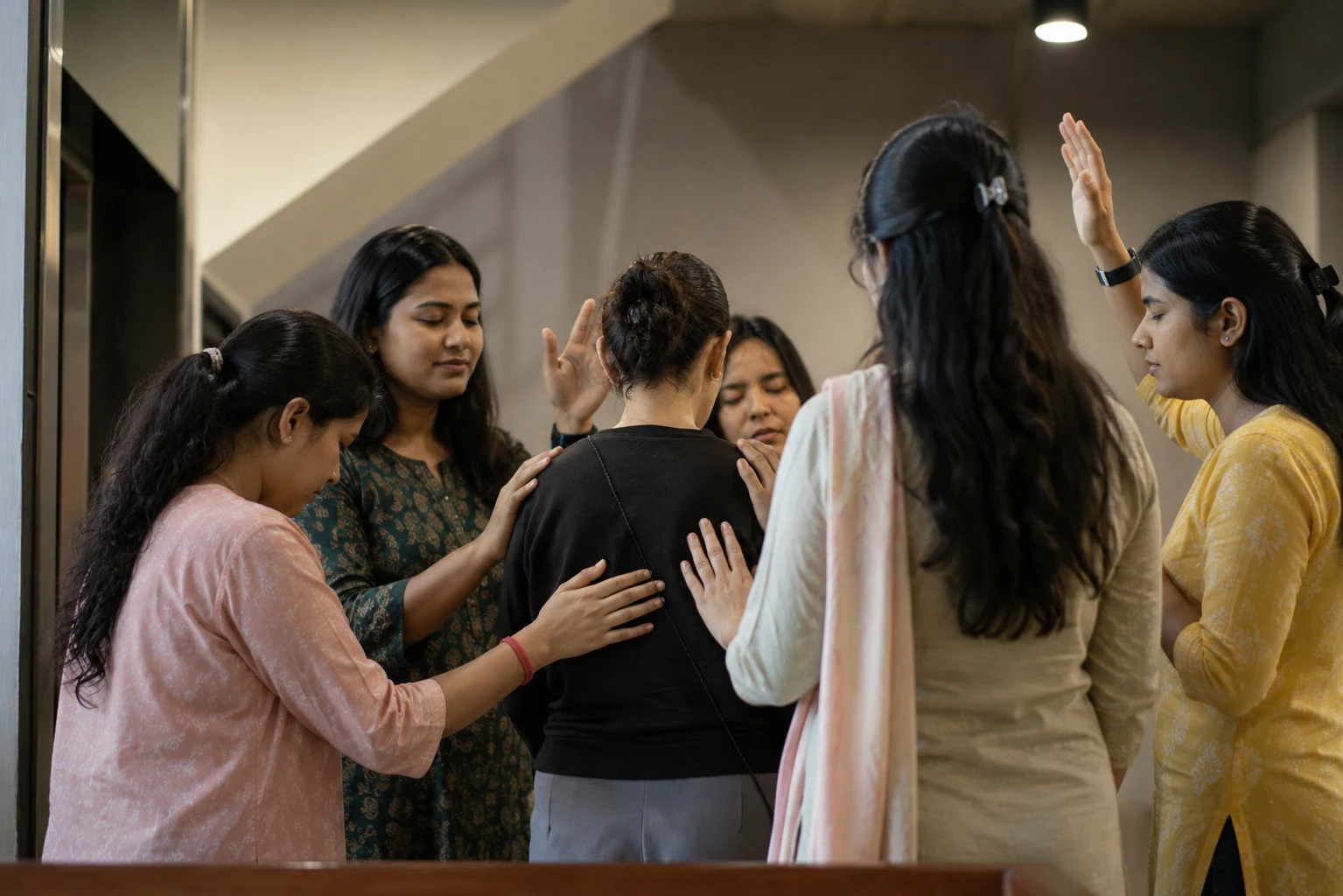
Treatment Programmes, Therapies and Modalities
Once detox is complete, treatment moves into structured therapy that addresses both the drinking and whatever sits underneath it. The plan is set with each resident and reviewed as she changes, not fixed on the day she arrives.


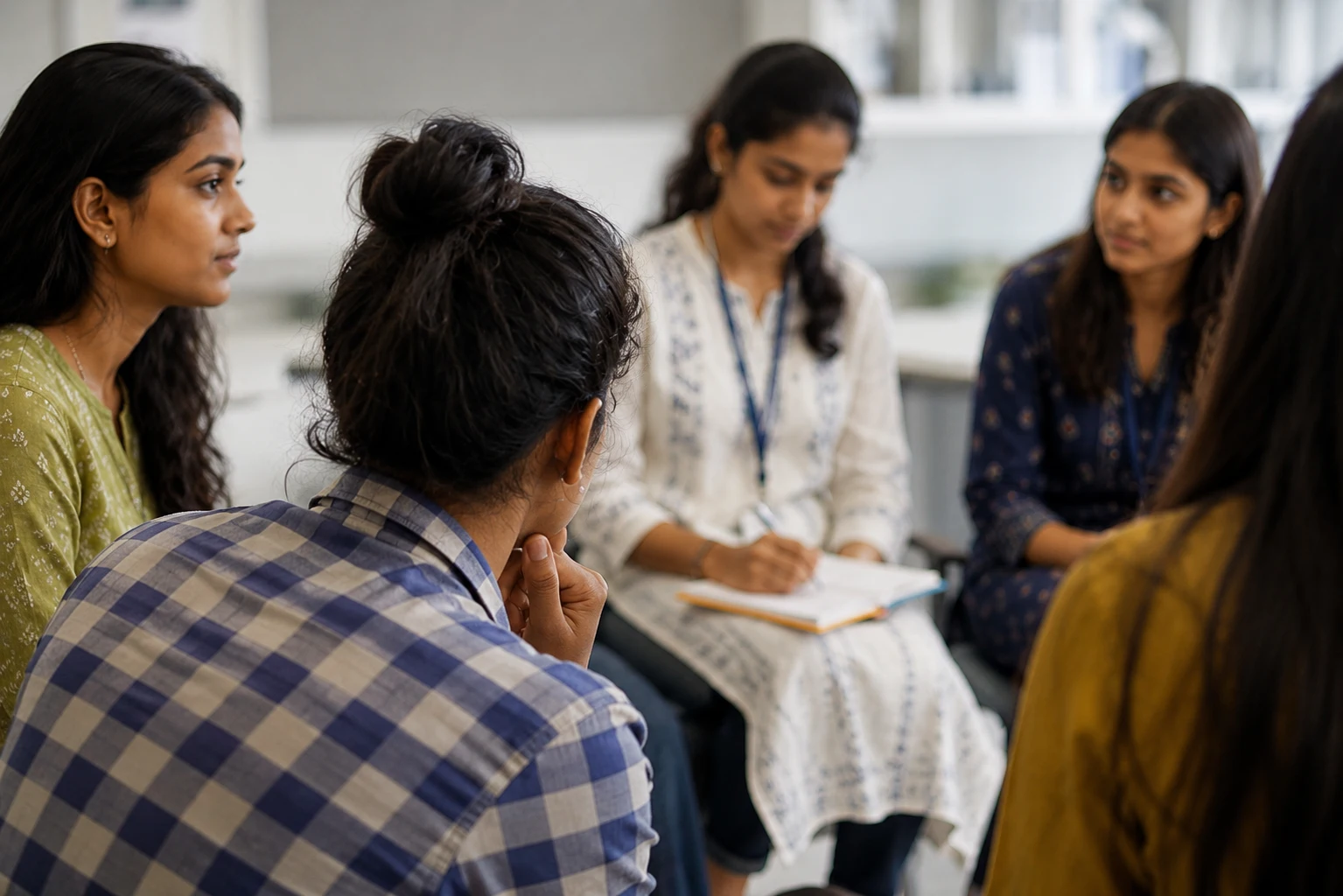
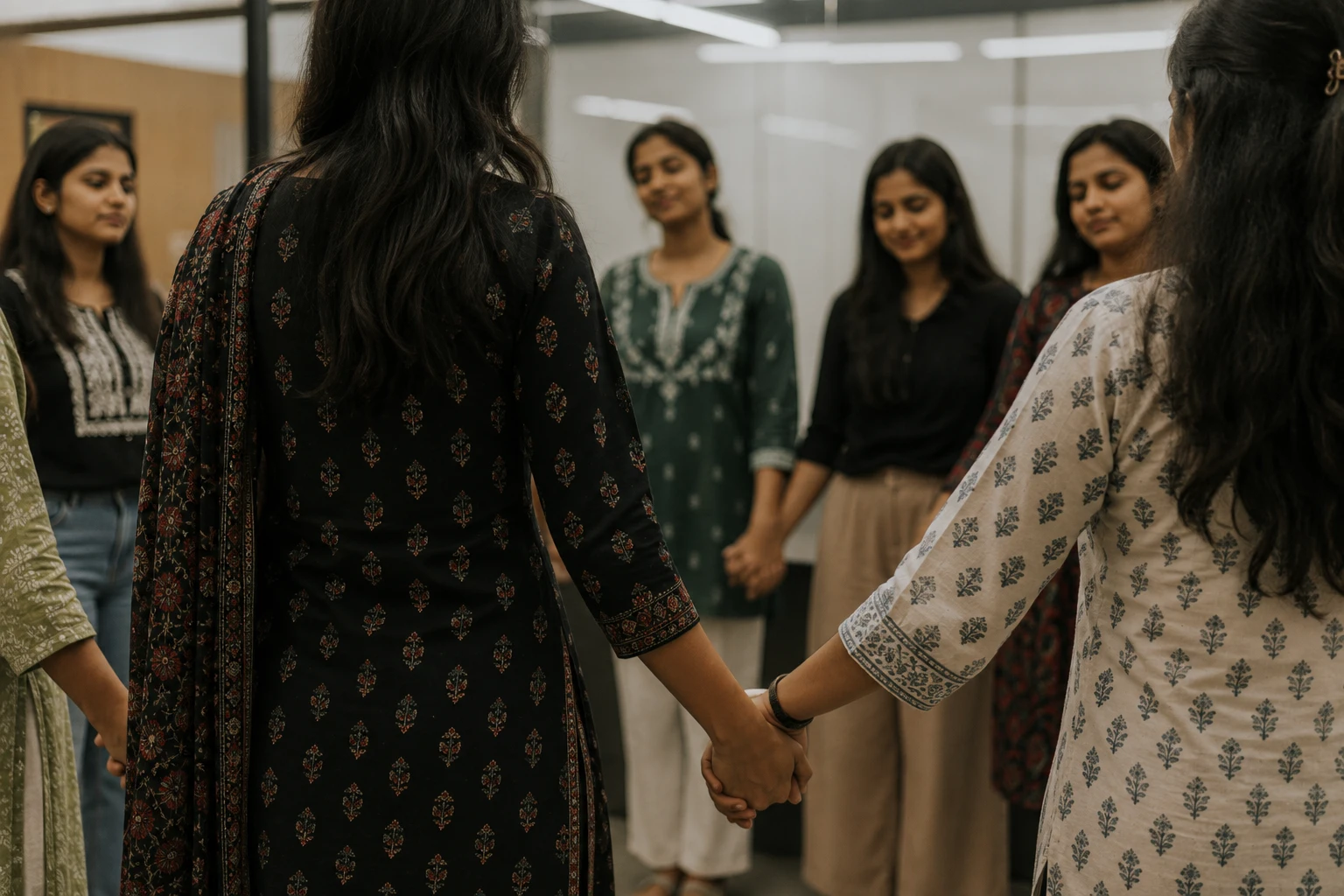
Residential and Inpatient Alcohol Treatment for Women
The core of our work is residential treatment. A resident lives on site and follows a clear daily structure that balances therapy, rest, meals, movement and time to think. That structure is doing real clinical work: heavy drinking dismantles routine, and rebuilding it is part of the recovery rather than a side effect of it.
Residential care is the right level for a woman with severe dependence, with repeated relapses, with co-occurring depression, anxiety or trauma, or whose home is simply not a place where sobriety has any chance in the first weeks.
Stay lengths vary. A short programme stabilises. A longer one changes the pattern. We will tell you honestly which one the situation calls for rather than which one is easier to agree to.
Stepping down
Continuing Care After the Residential Stay
Leaving is the risky part. When a resident is ready to step down, care continues rather than stopping at the gate.
- Regular follow-up counselling, in person or by phone where distance makes travel hard
- Medical review and medication follow-up
- Relapse-prevention planning built around her actual life, not a generic list
- Continued family sessions where they are helping
- Vocational and skills support where a woman needs a route to standing on her own
Families across Kangra, Mandi, Hamirpur, Una, Bilaspur and Shimla, and from Punjab, Chandigarh and Delhi, use this stage as much as the residential one.
The longer view
Holistic Care and Long-Term Recovery
Alongside therapy and medication, residents have yoga, breathing practice, time outdoors, creative and practical work, and food designed to repair years of poor nutrition. The point of all of it is the same: to rebuild a day that is worth being sober for.
Lasting recovery is not just the absence of alcohol. It is a life with enough structure, enough support and enough meaning in it that drinking stops being the most attractive option available at nine o'clock at night.
For many of the women we treat, that also means rebuilding standing inside the family, and some measure of independence. We work on that deliberately, because sobriety without either of those tends not to hold.
Admissions: How to Start Treatment
Starting treatment at Vaishalya begins with one confidential call. In urgent cases admission can happen the same day.
Confidential Call
Speak to a senior member of the team in Hindi or English, about yourself or about someone in your family. An initial screening covers drinking history, other substance use, medical history and current risk.
Medical and Psychological Assessment
Dr. Nitin Sharma and the counselling team assess physical health, mental health and safety to match her with the right level of care, including whether medical detox is needed first.
Treatment Plan and Admission
A plan is agreed, a date is set, and we explain what to bring and how to reach us. On arrival the medical team completes final assessments and treatment begins the same day.
Call +91 82194 74936 or +91 70181 48449. If it is easier to write than to speak, use the form below or WhatsApp us.
What Families Tell Us
The thing families mention most often is not clinical. It is that their daughter or wife could finally stop performing. In a women-only centre, with women treating her, the guard comes down in days rather than months, and the honest conversation that treatment depends on actually happens.
The second is discretion. Families arrive worried about who will find out, and they stay because nothing leaks. We do not confirm to any caller that a particular woman is here.
The third is that the work continued after discharge. Detox alone was never the point, and a plan that ends at the gate was never going to hold.
Registration, Governance and Standards
Vaishalya Women's Wellness Centre operates under Registration No. 2025/238/4/186. Clinical oversight is provided by Dr. Nitin Sharma, MBBS, who leads medical assessment and the treatment plan for every woman admitted.
We work alongside Asha Bhupender Charitable Trust, which delivers mental health awareness, counselling and community rehabilitation across Himachal Pradesh under the chairpersonship of Smt. Leena Kumari.
Where a woman's condition requires a level of care beyond our scope, we arrange transfer to an appropriate hospital rather than treating beyond it.
Frequently Asked Questions About Women's Alcohol Treatment
What treatment is available for alcohol addiction in women at Vaishalya?
A full path rather than a single service: medically supervised detox, residential treatment with individual and group therapy, treatment of co-occurring depression, anxiety or trauma, physical recovery through yoga, nutrition and Ayurvedic support, family sessions, and continuing care after discharge. Programmes are built around the individual woman rather than run as one fixed track.
Do you treat men as well?
No. Vaishalya is a women-only centre. All residents are women and the nursing and counselling staff working with them are women. Male family members visit by prior arrangement in designated areas.
How long does treatment usually last?
Detox is typically three to seven days. Residential treatment after that varies with the severity of the dependence, the presence of other conditions and what home looks like. Short programmes stabilise, longer ones change the pattern. We recommend the length the clinical picture calls for and explain why.
Can she be admitted if she does not want to come?
Adult women are admitted on their own decision. Families frequently call before the woman herself is ready, and that call is still worth making: we can advise on how to open the conversation and what not to do. In practice a woman who arrives reluctantly often engages once she finds the place is women-only and nobody is there to shame her.
Is treatment confidential?
Yes. We do not confirm to any caller whether a particular woman is a resident. Information is shared with family only with her consent, except where there is an immediate risk to her safety.
What happens after she leaves?
A continuing care plan is agreed before discharge: follow-up counselling, medical review, relapse-prevention planning built around her real situation, family sessions where they help, and skills or vocational support where she needs a route to independence. Nobody is discharged with good wishes alone.
Where are you and how do we reach you?
Mohal, Gugga Saloh Road, Tehsil Sullah, Palampur, Himachal Pradesh 176102, in the Kangra valley. The nearest airport is Gaggal (Kangra); the nearest major rail connections are Pathankot and Chakki Bank. Call before travelling and we will guide you in.
Contact
Start Her Recovery in Himachal
Whether you are the woman reading this at the end of another difficult evening, or the husband, daughter or sister who has run out of ideas, call us. The first conversation costs nothing and commits you to nothing.
Phone: +91 82194 74936 / +91 70181 48449
WhatsApp: +91 70181 48449
Address:
Vaishalya Women's Wellness Centre
Mohal, Gugga Saloh Road
Tehsil Sullah, Palampur
Himachal Pradesh 176102
Send a Confidential Message
We reply personally. Your details are not added to any mailing list.
She Does Not Have to Do This Alone
A women-only residential centre in the Kangra valley, with medical supervision, female staff and complete confidentiality.

About Vaishalya Wellness
Set in the quiet foothills of the Dhauladhar range in Palampur, Vaishalya Wellness is a women only rehabilitation and recovery centre. We offer a safe, private and dignified space for women seeking professional help with addiction, trauma and mental health, guided by clinical care and genuine compassion.
A women only residential facility in Himachal Pradesh.
Registration No: 2025/238/4/186
What We Treat
Additional Info
Contact
Call us +91 82194 74936 +91 70181 48449
Mohal, Gugga Saloh Rd,Tehsil Sullah, Palampur,
Himachal Pradesh 176102 Get directions
© 2026 Vaishalya Wellness. All rights reserved.
Privacy Policy