





- Resources
- Volunteer
- Internship
- Our approach
- FAQ
Home›Signs of Alcoholism in Women…
Signs of Alcoholism in Women: How to Recognise Alcohol Use Disorder
On this page
This page explains how to recognise alcohol use disorder in a woman: what clinicians actually mean by alcoholism, where ordinary drinking ends and dependence begins, the physical and behavioural signs, what withdrawal looks like between drinking episodes, and when the situation has become medically dangerous.
It is written for two readers. The woman quietly wondering whether her own drinking has crossed a line, and the husband, daughter, sister or mother who has been worried for months and has not known what to call it.
Nothing here is a diagnosis. But knowing the pattern is usually what turns a vague worry into a decision, and the decision is the part that matters.
Speak to us confidentially: +91 82194 74936 or +91 70181 48449.
Worried About Someone? Ask Us.
Describe what you have noticed and a senior member of our team will call you back. Nothing is shared with anyone outside the clinical team.
What We Mean by Alcoholism and Alcohol Use Disorder
Alcoholism is not a medical term. It is the word families use, and it usually means the point at which drinking has taken over. Clinicians use alcohol use disorder, or AUD, which describes the same thing with more precision and without the moral weight.
The distinction matters because the word alcoholic carries so much shame in Indian families that it stops people asking for help. A woman will accept that she is not sleeping, that her liver results are poor, that she cannot get through an evening without a drink, and still reject the label outright. So the label is worth setting aside.
What matters is the pattern: whether the drinking is causing harm, and whether she can stop it when she decides to. If the answer to the second is no, that is not a character failing. It is a medical condition with an established treatment.
The clinical definition
How Clinicians Define Alcohol Use Disorder
Alcohol use disorder is diagnosed when a pattern of drinking causes significant distress or problems at home, at work or in relationships. It sits under the wider category of substance use disorder.
Typical features include:
- Drinking more, or for longer, than she intended
- Repeated attempts to cut down that do not hold
- Strong cravings or urges to drink
- Continuing to drink despite clear harm to health, work or family
- Needing more alcohol for the same effect, and feeling physically unwell on stopping
- Time increasingly organised around drinking, or around recovering from it
The condition is described as mild, moderate or severe depending on how many of these are present. Severity matters clinically because it determines whether a supervised detox is needed before anything else can begin.

From Social Drinking to Alcohol Use Disorder: Where Does She Sit?
| Pattern of Drinking | Typical Amount | Common Behaviours | Risk Level | Suggested Next Step |
|---|---|---|---|---|
| Low-risk use | Occasional drinks, well within moderate limits, with plenty of alcohol-free days | Drinks socially, no binges, no obvious harm, no secrecy | Lower immediate risk, still worth reviewing from time to time | Keep an eye on the pattern, particularly during grief, illness or stress |
| Risky or unhealthy use | Sometimes exceeds what she intended, or nights with far more than planned | Occasional binges, heavier hangovers, the first arguments about drinking | Rising risk of alcohol-related harm | Cut back deliberately, and speak to a doctor if the pattern keeps repeating |
| Alcohol misuse | Regular heavy drinking with frequent intoxication | Missed responsibilities, money going on alcohol, injuries, strain at home | High risk of developing alcohol use disorder | Seek help from a doctor or an addiction specialist to discuss options |
| Alcohol use disorder (what families call alcoholism) | Daily or near-daily drinking, or repeated binges, with strong cravings and loss of control | Hiding drinking, withdrawal symptoms when not drinking, continuing despite serious harm | Very high. Health and safety are at risk | Discuss medically supervised detox and structured treatment with a specialist service |
These bands are a guide for recognising a pattern, not a diagnosis. Remember also that women reach harm at lower quantities than men, so a level of drinking that looks unremarkable in a husband may not be in a wife.
At a glance
Warning Signs You Should Not Ignore
Some warning signs come up again and again in women who have developed a problem with alcohol:
- Needing more than before to feel relaxed or to take the edge off
- Finding it hard to stop once she has started
- Drinking alone or in secret, and hiding bottles
- Blackouts, memory gaps, or decisions she cannot account for afterwards
- Struggling at home or at work because of drinking
- Feeling shaky, anxious or unwell after a period without alcohol, then drinking to feel normal again
That last one is the most important on this page. Drinking to relieve symptoms caused by not drinking is physical dependence, and it is the point at which stopping without medical support becomes unsafe.
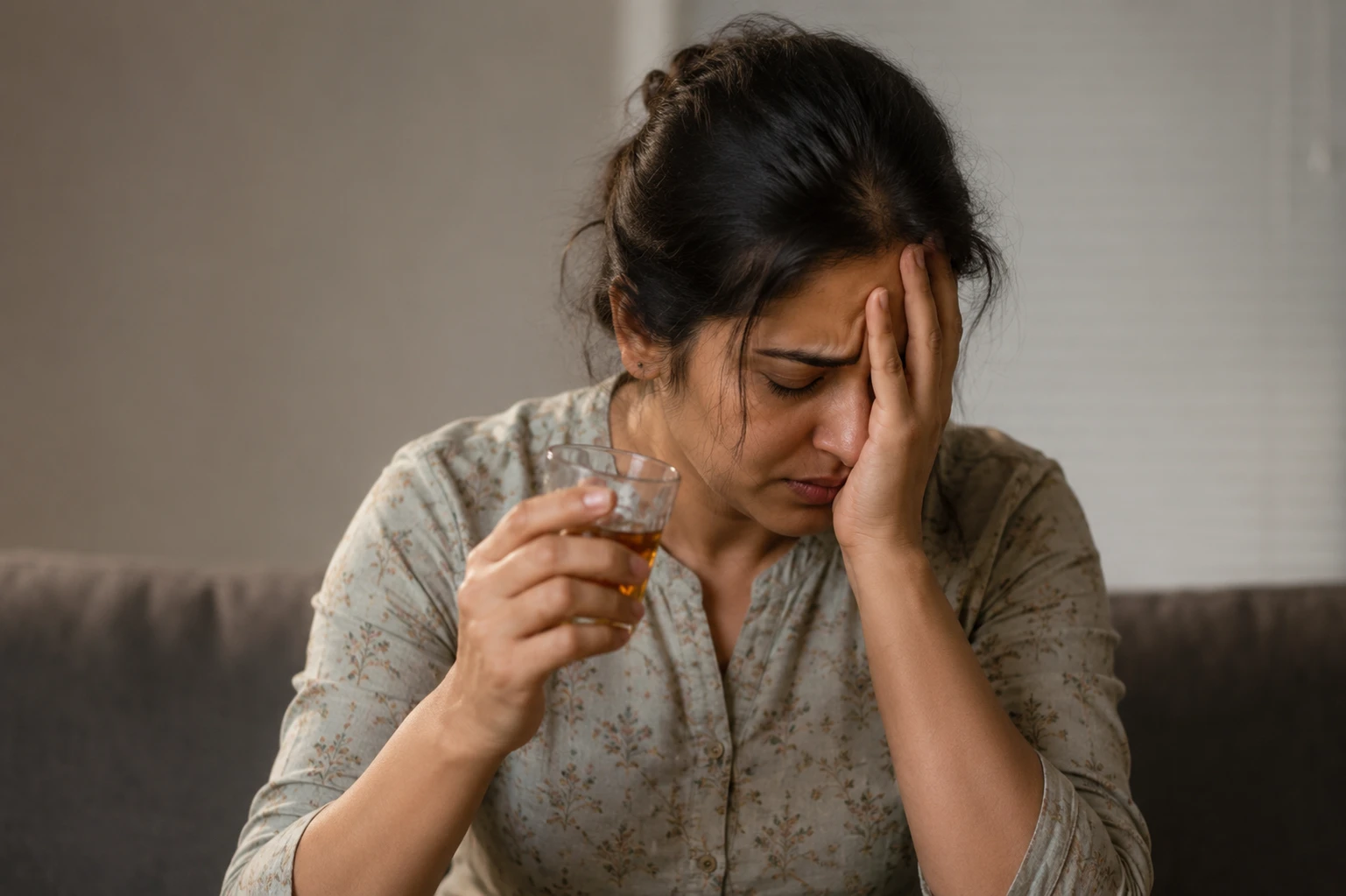
Early stage
Early and Subtle Signs of Alcoholism
Alcohol problems rarely appear overnight. At first the changes are small and easy to explain away, which is exactly why they are missed for years.
The Timing Shifts Earlier
The first drink moves from after dinner to before it, then to the afternoon. Each shift is small enough to justify at the time.
The Measure Grows Quietly
The glass gets larger, the top-up stops being counted, and what used to be two becomes four without any moment of decision.
Small Concealments Begin
A second bottle bought at a different shop. Drinking before guests arrive so that one glass in company looks moderate.
It Becomes the Coping Tool
Alcohol stops being pleasure and becomes function: for sleep, for anxiety, for getting through an evening that would otherwise be unbearable.
Sleep Falls Apart
She falls asleep quickly and wakes at three, wired and anxious. Alcohol wrecks sleep architecture, and the exhaustion then justifies the next drink.
Quiet Rules Appear
Only after six. Only on weekends. Never alone. The rules themselves are the tell. People without a problem do not need them.
Physical vs Behavioural Signs: What Should You Look For?
| Physical Signs | Behavioural and Emotional Signs |
|---|---|
| Persistent facial redness, or broken blood vessels across the nose and cheeks | Finding it hard to stop once she starts, even when she meant to have one |
| Puffiness or swelling around the eyes and face | Binge episodes, or regularly losing track of how much she has had |
| Dark circles, and a generally tired or older appearance | Hiding bottles, understating the amount, or drinking alone in secret |
| Frequent hangovers, nausea, or ongoing stomach trouble | Mood swings, irritability, anxiety or low mood that track closely with drinking |
| Shaky hands, sweating, or feeling unwell after a stretch without alcohol | Missing work, family events or responsibilities because of drinking or recovering from it |
| Unexplained bruises or small injuries that take longer than they should to heal | More arguments about alcohol, or people around her expressing concern |
| Weight loss, poor appetite, yellowing of the eyes or skin, or abnormal liver blood tests | Withdrawing from friends, hobbies and anything that competes with drinking for time |
Physical signs tend to appear later than behavioural ones. If the physical column is already recognisable, the drinking has usually been going on for a long time.
Signs of Alcoholism in Someone You Love
It is nearly always easier to see a pattern in someone else than in yourself. If you are worried about your wife, mother, daughter or sister, these are the things worth paying attention to.
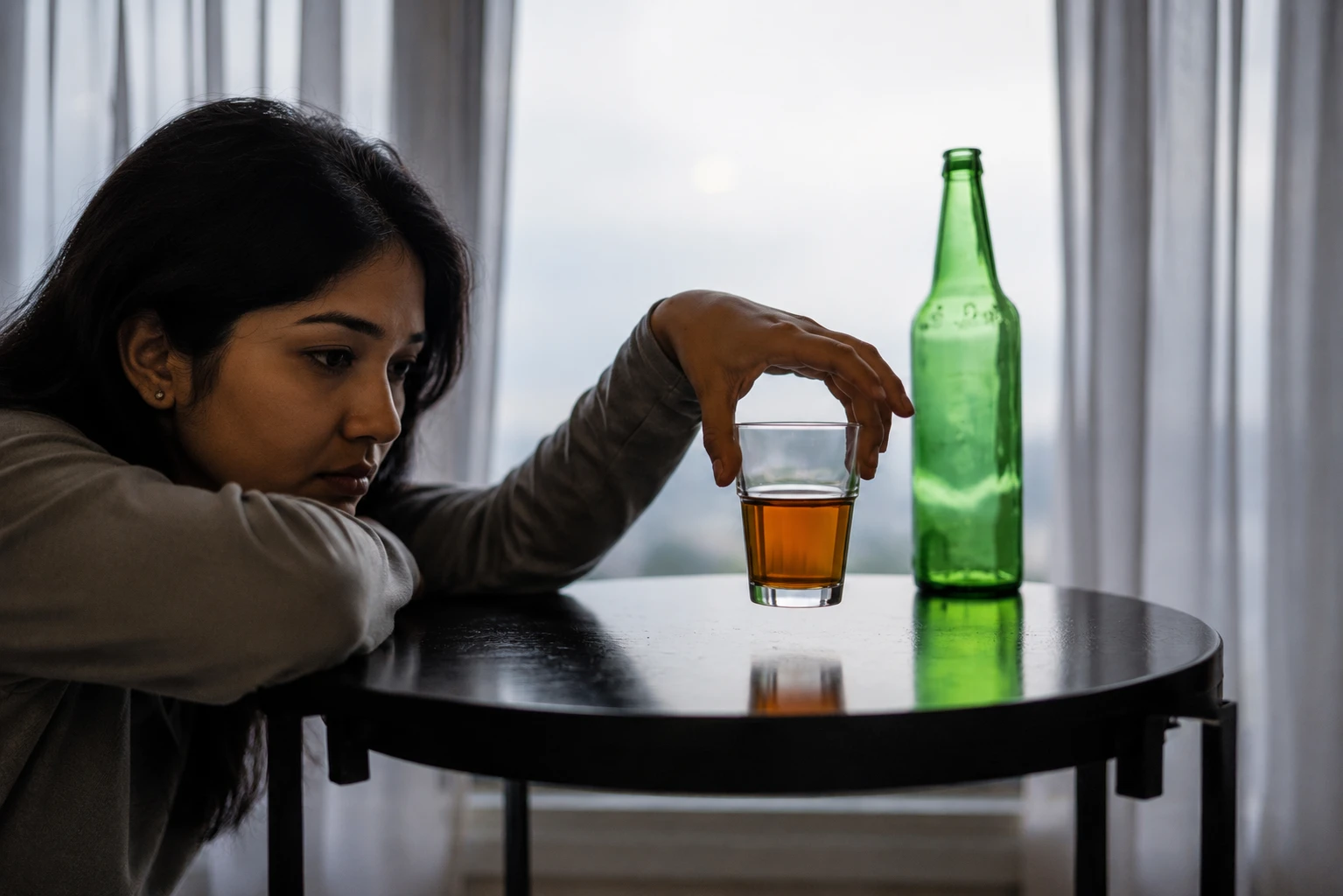
Signs in a Wife, Mother or Sister
You may see it well before she does. Red flags include:
- A pattern of drinking that quietly overshadows everything else
- Mood swings, irritability or a change in personality when she drinks
- Repeated promises to stop or cut down that are not kept
- Money, accidents or arguments that keep tracing back to alcohol
- Household responsibilities slipping in a way that is out of character
- Defensiveness or anger whenever drinking is mentioned
If several of these are familiar, she is likely struggling with alcohol dependence and would benefit from professional support.
Signs in a Young Woman or Student
In younger women the signs often show up as change rather than damage:
- A sharp drop in attendance, marks or interest in things she cared about
- A new friend group organised largely around drinking
- Blackouts treated as funny stories rather than warnings
- Money disappearing without explanation
- Sleeping through the day, awake and restless at night
- Drinking to manage anxiety, exam pressure or social situations
Because dependence progresses faster in women, an early pattern in a young woman deserves to be taken seriously rather than waited out.
Signs in an Older Woman
In older women the signs are frequently mistaken for ageing or for illness:
- Confusion, memory trouble or unsteadiness written off as normal ageing
- Repeated falls, fractures or unexplained bruising
- Poor appetite, weight loss and neglected self-care
- Withdrawal from family and social life after a bereavement or retirement
- Alcohol interacting badly with prescribed medication
Widowhood and isolation are common triggers, and the drinking is often entirely invisible because she lives alone. The body tolerates it far less well at this age.
How to Raise It Without It Ending in a Fight
Choose a moment when she has not been drinking. Speak about what you have seen rather than what you have concluded: the missed evening, the shaking hands, not the label. Say plainly that you are frightened for her, not disappointed in her.
Expect denial the first time. That is normal and it is not the end of the conversation. What usually shifts things is not a confrontation but the discovery that help exists in a form she can accept, which for many women means a women-only centre where nobody will be told.
If you are not sure how to start, call us and we will talk it through with you before you say anything to her.
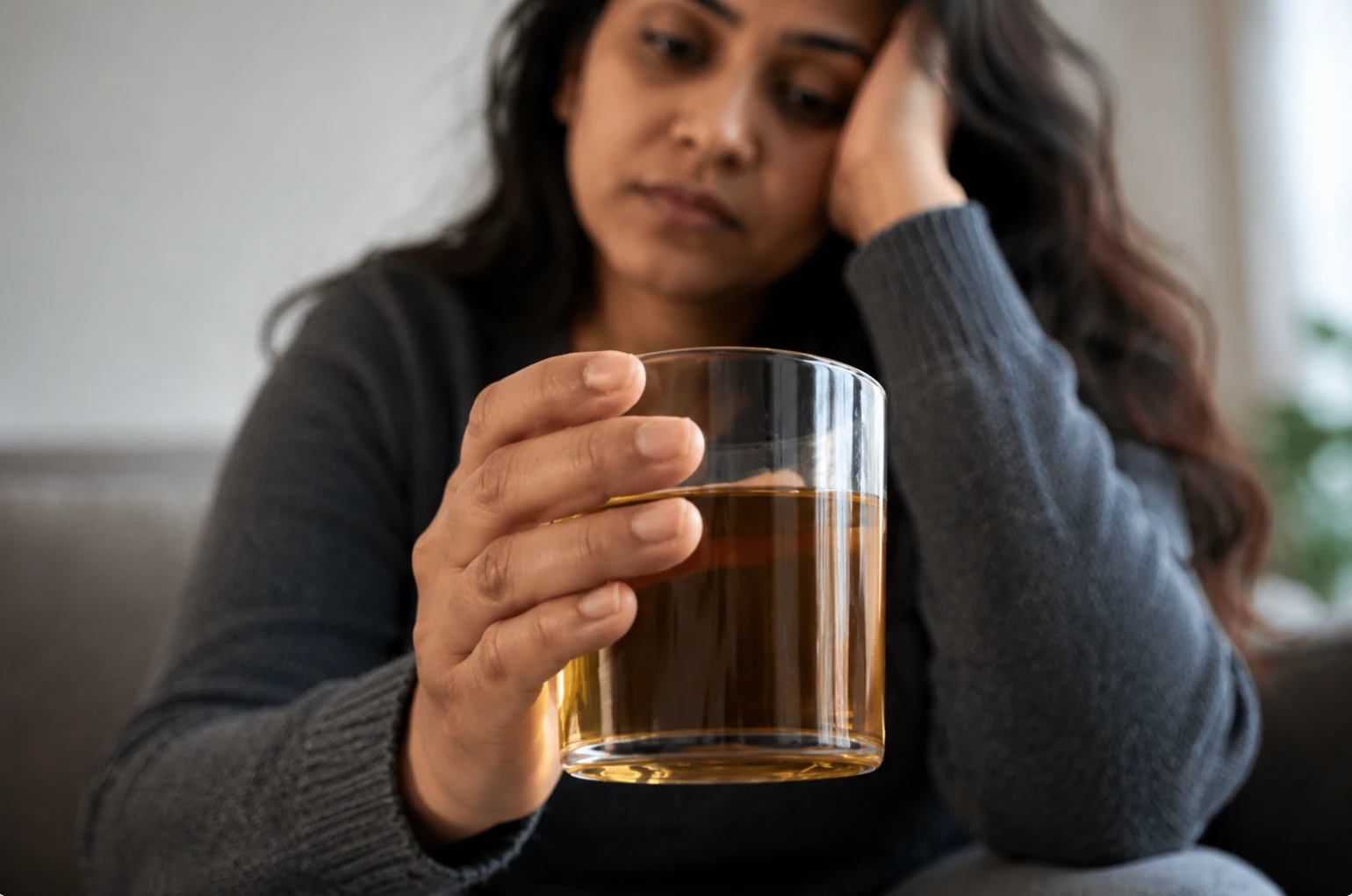
Between drinks
Withdrawal Symptoms Between Drinking Episodes
One of the clearest indicators of dependence is what happens in the gaps. If she feels worse the longer she goes without alcohol, and better shortly after drinking, the body has adapted and now needs it to stay level.
Common symptoms in the hours after the last drink:
- Anxiety, restlessness and irritability that lift after a drink
- Trembling hands, particularly first thing in the morning
- Sweating, a racing pulse and disturbed sleep
- Nausea, retching or an inability to eat before midday
- Headache, poor concentration and low mood
Many women describe this as the worst part of the whole thing, because it removes any remaining choice. The drinking is no longer for enjoyment. It is to stop feeling ill.
Dangerous Withdrawal Symptoms and Why Home Detox Is Unsafe
More serious alcohol withdrawal symptoms include:
- Confusion or disorientation
- Hallucinations, seeing or hearing things that are not there
- Seizures
- A very fast heart rate, high blood pressure or fever
- Severe agitation and profound tremor
These can be life threatening. Seizures most often occur between twelve and forty-eight hours after the last drink, and in a small proportion of people withdrawal escalates into delirium tremens, which is a medical emergency.
This is why unsupervised detox at home is unsafe for anyone drinking heavily and daily. A medically supervised setting is not a comfort, it is the safety margin. Read about our women's medical detox programme.
If a woman who drinks heavily has a seizure, becomes confused or disoriented, starts seeing or hearing things, develops a high fever, or cannot be roused properly, treat it as an emergency and get her to a hospital immediately. Do not wait to see whether it settles.
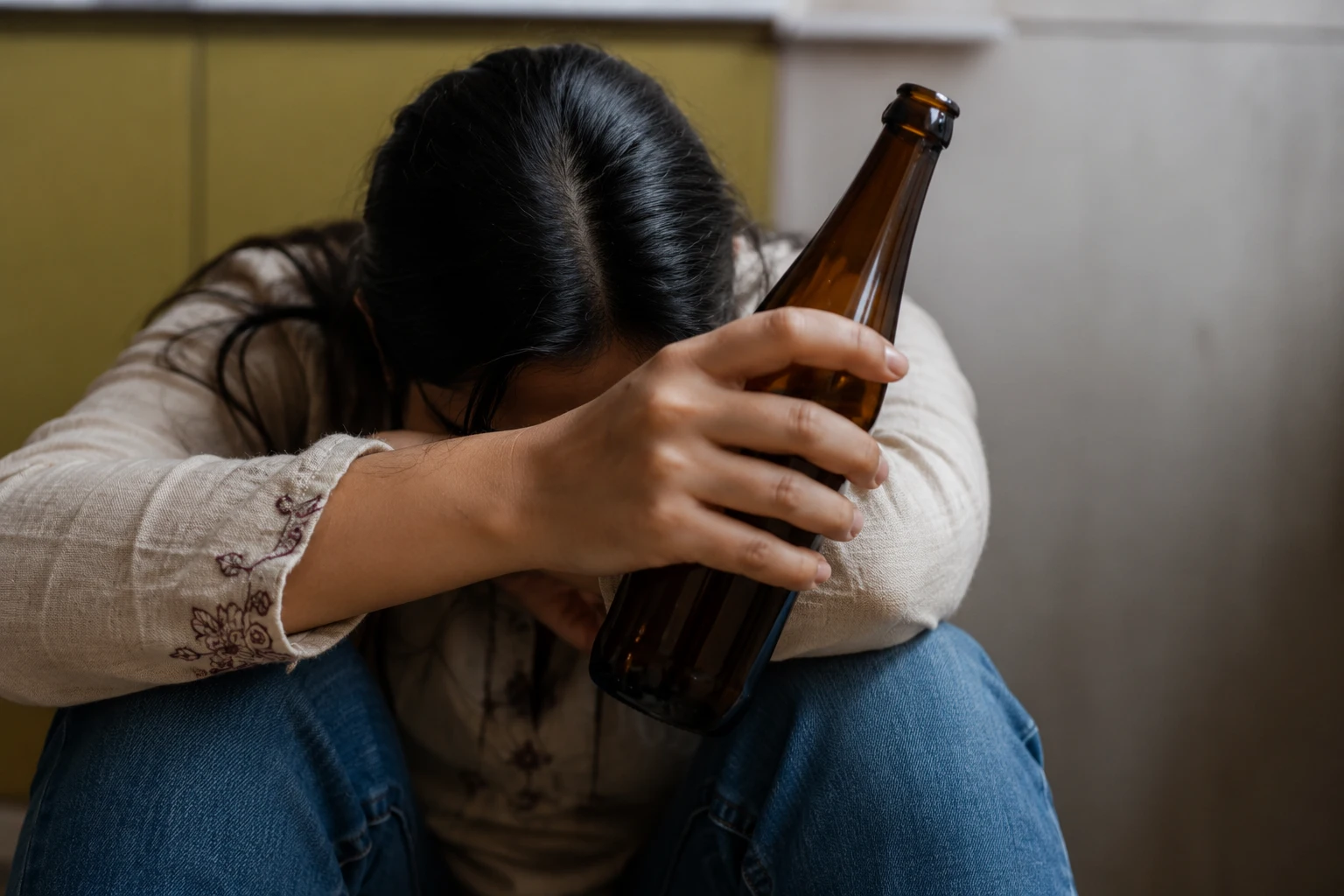
How Clinicians Diagnose Alcohol Use Disorder
If you or someone you care about is worried about drinking, it helps to know what actually happens at an assessment. Doctors are not guessing. They use specific questions, established tools and tests.



What to do
You Recognise the Signs. What Now?
Recognising it is the hard part and you have done it. The next steps are smaller than they look.
Make One Call
Describe what you have noticed. No commitment, no cost, no name entered on any register. If it turns out treatment is not needed, we will tell you that too.
Get It Assessed Properly
A clinical assessment establishes how severe the dependence is and whether a medically supervised detox is needed before anything else can start.
Start Treatment
Detox where it is needed, then residential treatment, therapy and a plan for going home. Every stage is women-only and led by female staff.
Learn more about our treatment programme for women and our medical detox, or call +91 82194 74936.
Registration, Governance and Standards
Vaishalya Women's Wellness Centre operates under Registration No. 2025/238/4/186. Clinical oversight is provided by Dr. Nitin Sharma, MBBS, who leads medical assessment and the treatment plan for every woman admitted.
We work alongside Asha Bhupender Charitable Trust, which delivers mental health awareness, counselling and community rehabilitation across Himachal Pradesh under the chairpersonship of Smt. Leena Kumari.
This page is general information and is not a diagnosis or a substitute for medical advice. Where a woman's condition requires care beyond our scope, we arrange transfer to an appropriate hospital.
Frequently Asked Questions
What is the difference between heavy drinking and alcoholism?
Heavy drinking describes quantity. Alcohol use disorder, which families call alcoholism, describes loss of control: cravings, an inability to stop once started, needing more for the same effect, feeling physically unwell without alcohol, and continuing despite clear harm. Someone can drink heavily for years without dependence, and someone can become dependent on quantities that look modest, particularly a woman.
How much alcohol is too much for a woman?
Lower than for a man, and lower than most people assume. Women carry proportionally less body water and produce less of the gastric enzyme that breaks alcohol down, so the same drink reaches a higher blood concentration. Liver damage develops at lower intake and over shorter periods. Rather than fixing on a number, the more useful question is whether the drinking is causing harm and whether she can stop when she decides to.
Can someone be dependent on alcohol without drinking every day?
Yes. Repeated binges with strong cravings and loss of control amount to alcohol use disorder even if there are dry days in between. Some women drink nothing all week and lose control entirely on two days, which is still dependence and still carries withdrawal risk.
What are the first signs of alcohol withdrawal?
Usually six to twelve hours after the last drink: anxiety and restlessness, trembling hands, sweating, a faster pulse, nausea, headache and disturbed sleep. If these settle after a drink, that is physical dependence. Anyone experiencing this should not attempt to stop without medical supervision.
She says she can stop whenever she wants. Is that possible?
It is possible, and it is also the most common thing said by people who cannot. The practical test is not the claim but the record: how many attempts have there been, and how long did each one last? Repeated attempts that fail within a few days point to physical dependence rather than a lack of resolve.
Is it dangerous to stop drinking suddenly?
For someone drinking heavily and daily, yes. Abrupt withdrawal can cause seizures and, in a small number of cases, delirium tremens, which is a medical emergency. This is precisely why supervised detox exists. Please call before attempting anything at home.
Do you treat women only?
Yes. Vaishalya is a women-only residential centre in Palampur, Himachal Pradesh. All residents are women and the nursing and counselling staff working with them are women. We do not confirm to any caller whether a particular woman is here.
Contact
Talk to Someone Who Has Seen This Before
If this page has described someone you know, or described you, the next step is a single conversation. It costs nothing and commits you to nothing.
Phone: +91 82194 74936 / +91 70181 48449
WhatsApp: +91 70181 48449
Address:
Vaishalya Women's Wellness Centre
Mohal, Gugga Saloh Road
Tehsil Sullah, Palampur
Himachal Pradesh 176102
Send a Confidential Message
We reply personally. Your details are not added to any mailing list.
Naming It Is the Hardest Part
A women-only residential centre in the Kangra valley, with medical supervision, female staff and complete confidentiality.

About Vaishalya Wellness
Set in the quiet foothills of the Dhauladhar range in Palampur, Vaishalya Wellness is a women only rehabilitation and recovery centre. We offer a safe, private and dignified space for women seeking professional help with addiction, trauma and mental health, guided by clinical care and genuine compassion.
A women only residential facility in Himachal Pradesh.
Registration No: 2025/238/4/186
What We Treat
Additional Info
Contact
Call us +91 82194 74936 +91 70181 48449
Mohal, Gugga Saloh Rd,Tehsil Sullah, Palampur,
Himachal Pradesh 176102 Get directions
© 2026 Vaishalya Wellness. All rights reserved.
Privacy Policy